
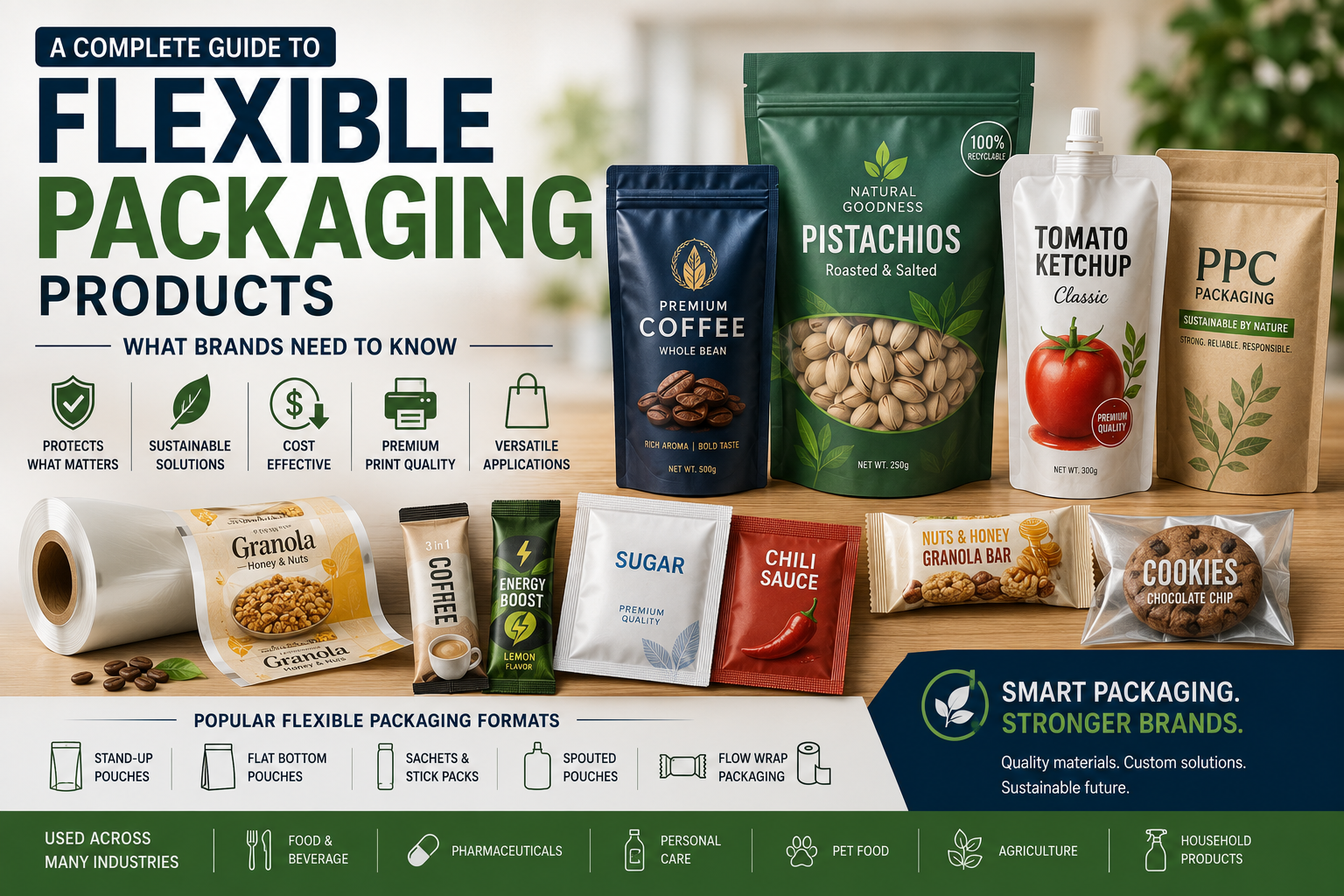
If you’ve been in the product business for even a short time, you’ve probably heard the term flexible packaging products thrown around a lot. And for good reason. From the snack aisle at your local grocery store to the pharmaceutical shelf at a pharmacy, flexible packaging shows up everywhere. It’s lightweight, cost-effective, and works across a wide range of industries.
But not all flexible packaging is created equal. The materials, formats, and applications vary widely. If you’re a brand owner, manufacturer, or packaging buyer trying to make sense of all this, you’re in the right place. This guide breaks it down in plain language, no jargon, just the facts.
What Exactly Falls Under Flexible Packaging Products?
The term “flexible packaging” refers to any package made from a non-rigid material that can be bent, shaped, or compressed without breaking. Think pouches, bags, wrappers, sachets, and films, rather than rigid containers like glass bottles or hard plastic tubs.
Flexible plastic packaging is the most common variety. It’s made from materials like polyethylene (PE), polypropylene (PP), polyester (PET), and laminates that combine two or more layers. These layers serve different purposes: one might provide structural strength, another might provide a moisture barrier, and yet another might add printability.
Among all the formats out there, flexible pouch packaging is one of the most widely used right now. Stand-up pouches, flat pouches, and spouted pouches are all variations of this format. They work well for everything from baby food and sauces to protein powders and pet treats.
Then you have flexible wrappers, which are flat films used to wrap products, think candy bars, snack bars, or pharmaceutical tablets. These are typically heat-sealed around the product and can be printed with branding, nutritional info, or safety warnings.
Flexible Packaging Materials for Food Products: What’s Actually Inside?
Food is one of the biggest users of flexible packaging, and also one of the most demanding. The packaging has to do a lot of heavy lifting: keep moisture out, prevent oxidation, block UV light, and in some cases even withstand high temperatures.
That’s where flexible packaging materials for food products get interesting. A typical structure might include a printed outer layer (like BOPP or PET for clarity and ink adhesion), a middle barrier layer (like EVOH or foil for oxygen and moisture protection), and an inner sealant layer (like PE or CPP that melts when heat-sealed).
When you see a shiny, multi-layer snack bag that keeps chips crispy for months, that’s flexible packaging materials doing their job. Some products, like coffee or high-fat snacks, need especially strong barriers. That’s where Custom Mylar Bags come in. Mylar (a type of polyester film) is often used for its excellent oxygen and moisture barrier properties.
For products that need precise dosing or single-serve portions, Stick Pack Packaging is a smart choice. It’s a long, narrow format often used for protein powders, sugar packets, coffee sticks, and pharmaceuticals. It uses very little material while keeping contents fresh and protected.
How PPC Flexible Packaging Fits Into the Picture
One format that comes up often in premium categories is PPC flexible packaging. PPC stands for poly-paper-composite, a mix of polymer and paper layers. The result is a packaging structure that has a natural, paper-like feel on the outside while still giving you the barrier performance of plastic on the inside.
Brands that want a more premium, eco-forward look without giving up barrier performance often lean toward this option. It’s particularly common in coffee packaging, dry goods, and pet food, categories where shelf presence and sustainability cues both matter.
Speaking of sustainability, the conversation around packaging has shifted significantly in recent years. Sustainable Packaging options, including recyclable mono-materials, compostable films, and reduced-material formats, are now a real part of the flexible packaging conversation, not just a marketing talking point.
Flexible Packaging for Food Products: Formats That Work
When it comes to flexible packaging for food products, the format matters as much as the material. Brands choose their packaging format based on the product type, shelf life requirements, distribution channel, and consumer expectations.
Stand-up pouches are arguably the most recognized format in the flexible food packaging space. Their flat bottom allows them to stand upright on shelves, making them great for retail display. They can be made with resealable zippers, tear notches, or spouts, depending on the product.
Flat-bottom bags are another format gaining traction, especially in premium coffee and specialty foods. They offer a more structured, box-like shape when filled and look high-end on the shelf. For brands that want individual servings wrapped in a continuous film, Flow Wrap Packaging is a go-to; it wraps snack bars, baked goods, and produces efficiently at high speeds.
Sachets are a widely used flexible format, especially for single-use portions. Whether it’s a ketchup packet, a shampoo sachet, or a pharmaceutical dose, Custom Sachet Packaging is designed for precise portioning and minimal waste. It’s extremely cost-effective for sample distribution and impulse purchases.
Custom Flexible Packaging: Building Your Brand on the Shelf
Stock packaging gets the job done, but it has limits. Brands that need specific dimensions, barrier specs, or a strong shelf presence usually move toward custom flexible packaging. It puts you in control of the size, shape, material, structure, and print, including options like matte finishes, metallic effects, resealable closures, and transparent windows.
Digital printing has made short-run custom packaging much more accessible than it used to be. You no longer need to order tens of thousands of units just to get your branding on a bag. Small and mid-size brands can now order smaller quantities at reasonable prices, which makes seasonal launches and market testing a lot easier.
When you scale up, though, the complexity grows with it. Lead times, material sourcing, and quality consistency all require closer attention at higher volumes. Working with a packaging partner who actually understands your product and industry saves a lot of back-and-forth down the line.
One format worth mentioning specifically is the flexible bag, a broad category that includes stand-up pouches, lay-flat bags, gusseted bags, and more. Each has its own strengths. Lay-flat bags are ideal for items that don’t need to stand on a shelf. Gusseted bags offer more volume for bulkier products. The choice depends on your product’s dimensions and how it will be stored or displayed.
Safety and Compliance in Flexible Packaging
Any brand selling packaged products needs to think about compliance, and this is especially true for food, pharmaceuticals, and products meant for children.
For products that pose a risk if accessed by children, Child Resistant Packaging is not just a good idea; in many markets, it’s a legal requirement. Flexible packaging can be made child-resistant through specially designed zipper closures or peel-and-push mechanisms that require two steps to open.
Beyond child safety, food contact compliance is critical. Packaging materials that come into direct contact with food must meet standards set by bodies like the FDA (in the US) or EFSA (in Europe). This includes restrictions on inks, adhesives, and certain polymers that could migrate into the food product.
Why Flexible Packaging Materials Keep Improving
The flexible packaging materials space hasn’t stood still. Over the past decade, material scientists and packaging engineers have developed thinner films with better performance, barrier coatings that replace thick foil layers, and bio-based polymers that offer a lower carbon footprint.
High-barrier structures that used to require five or six layers can now sometimes be achieved in three, reducing material use and cost. Water-based inks and solvent-free adhesives have reduced the environmental impact of the printing and lamination process.
Recyclability has become a major driver of innovation. The challenge with multi-layer laminates is that different materials are bonded together, making them hard to separate and recycle. The industry has been working hard on mono-material solutions, packaging made entirely from one type of polymer, which can actually be processed in existing recycling streams.
If you want to see what this looks like in practice, Contipac inc is one example of a packaging supplier that works across these material and sustainability considerations, helping brands find the right structure for their specific product needs.
Choosing the Right Flexible Packaging Products for Your Business
With so many options on the table, choosing the right flexible packaging products comes down to a few key questions.
First, think about the physical properties of your product. Powders, liquids, solids, and gels all have different packaging needs. A liquid sauce needs strong seals and possibly a spout. A powder needs good barrier properties against moisture.
Second, consider your required shelf life. Products that need 12 to 24 months on the shelf need more robust barrier structures than products consumed within weeks. Modified atmosphere packaging (MAP), oxygen absorbers, or desiccants can extend shelf life further.
Third, think about where it will be sold. Retail packaging needs a strong shelf presence and clear branding. E-commerce packaging needs to withstand shipping and handling. Club store packaging needs to handle bulk quantities.
Finally, consider what your customer expects. Premium product buyers expect premium packaging. Budget-conscious buyers care more about functionality than aesthetics. The packaging should match the flexible food packaging materials to your product positioning.
Once you have answered these questions, you can narrow down format, material, print method, and special features. Then it is a matter of finding a supplier who can deliver consistently at your required volumes and quality levels.
FAQs
What are flexible packaging products?
Flexible packaging products are packages made from non-rigid materials such as films, foils, and laminates. They include pouches, bags, sachets, wrappers, and other formats that can be bent or shaped without breaking. They are widely used in food, pharmaceutical, personal care, and industrial applications.
What materials are used in flexible packaging?
The most common flexible packaging materials include polyethylene (PE), polypropylene (PP), polyester (PET), nylon, and aluminum foil. These are often combined into multi-layer laminates to achieve the right balance of barrier protection, strength, and printability. Newer bio-based and recyclable options are also becoming more available.
Is flexible packaging good for food products?
Yes, flexible food packaging is one of the most effective ways to protect perishable goods. It can be engineered to block moisture, oxygen, and UV light, all of which degrade food quality. When designed correctly, flexible packaging for food products can significantly extend shelf life compared to many rigid alternatives.
What is the difference between flexible and rigid packaging?
Rigid packaging, like glass bottles, metal cans, or hard plastic containers, holds its shape regardless of content. Flexible packaging conforms to the product and can be compressed or folded. Flexible options are generally lighter, use less material, and cost less to ship, while rigid packaging tends to offer better stacking and drop resistance.
Can flexible packaging be recycled?
Recyclability depends on the material structure. Single-material flexible packaging, made entirely from one polymer like PE, can be recycled through film drop-off programs in many regions. Multi-layer laminates are harder to recycle because different materials are bonded together. The industry is actively working on more recyclable structures to address this challenge.
What is custom flexible packaging?
Custom flexible packaging refers to packaging designed specifically for a brand’s product, including custom dimensions, material specs, print design, closures, and special features. It gives brands full control over how their product looks on the shelf and how it performs in distribution. Minimum order quantities vary by supplier and print method.
How do I choose the right flexible packaging for my product?
Start with your product’s physical properties and shelf life requirements. Then factor in the distribution channel, retailer requirements, and target consumer. From there, work with a packaging supplier to select the right format and material structure. Sampling and testing before committing to a full production run is always a good idea.
Final Thoughts
The world of flexible packaging products is broad, and it’s evolving fast. What used to be a fairly straightforward choice between a few formats has grown into a highly specialized field with hundreds of material combinations, format options, and performance capabilities.
For brands, the opportunity is real. Good packaging protects your product, communicates your brand, and can actually influence buying decisions at the point of sale. Bad packaging, on the other hand, leads to damaged goods, returns, and unhappy customers.
Whether you’re looking at flexible pouch packaging for a new snack line, exploring flexible plastic packaging for a liquid product, or evaluating sustainable alternatives, taking the time to understand your options pays off. The right packaging decision today can save you real money and headaches down the line.
Start with your product’s needs, work backward to the right format and material, and partner with someone who actually knows this space. That’s the shortest path to packaging that performs, from the production line all the way to the end consumer.