
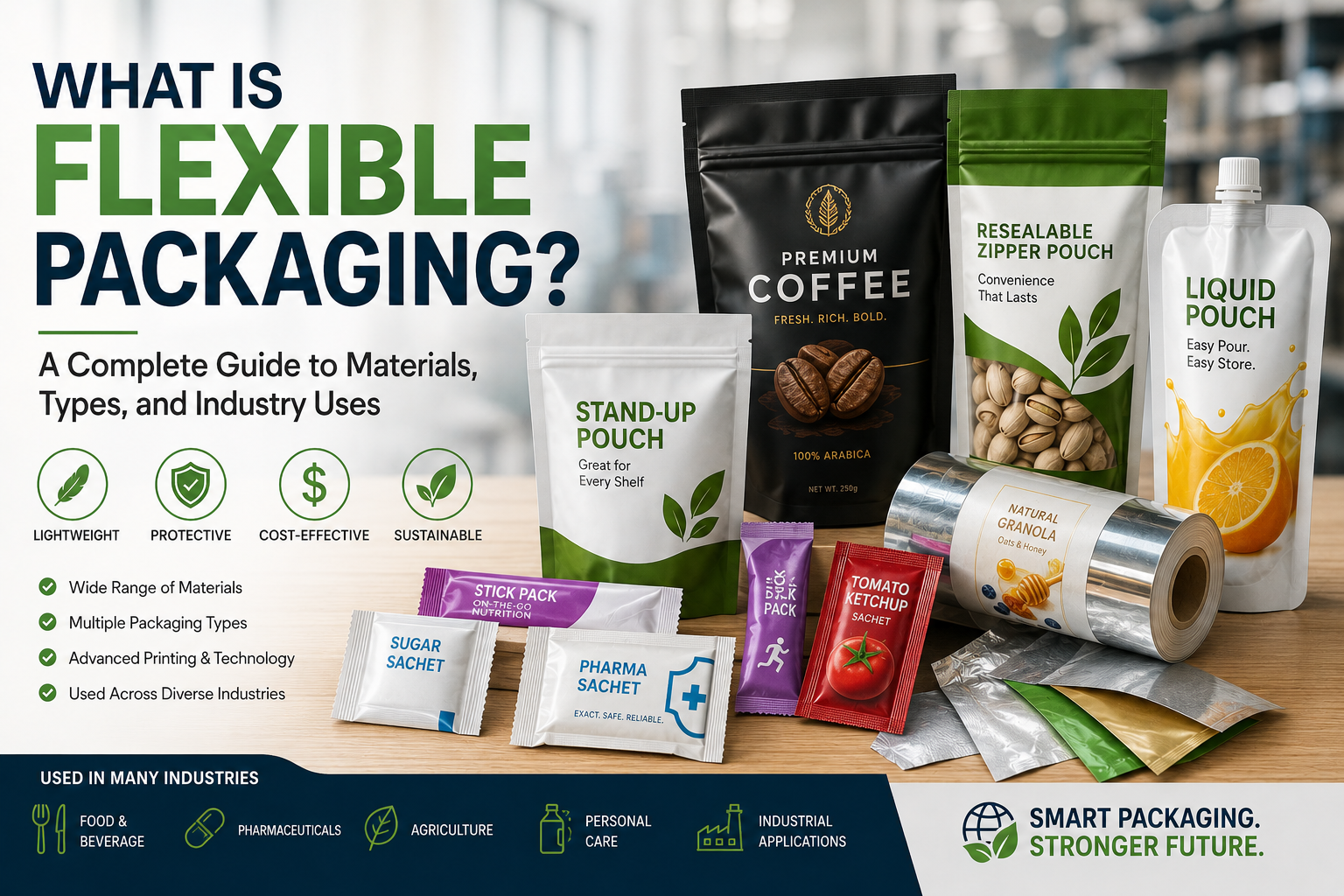
If you’ve ever held a snack pouch, a coffee bag, or a resealable zip-lock sachet, you’ve already used flexible packaging. But what is flexible packaging, exactly, and why has it become the go-to choice for so many industries around the world?
In simple terms, flexible packaging refers to any package or container made from materials that easily yield to shape. Unlike rigid containers like glass jars or metal cans, flexible packaging bends, folds, and conforms without breaking. It’s lightweight, space-saving, and often more affordable to produce and ship.
From food and beverages to pharmaceuticals, agriculture, and personal care, the flexible packaging industry has grown massively over the past two decades. And for good reason, it offers a smart balance of functionality, cost, and shelf presence that rigid formats simply can’t match.
In this guide, we’ll break down everything: how it works, what materials are used, the different types available, and why brands across Pakistan and internationally make the switch.
Understanding Flexible Packaging: The Basics
At its core, flexible packaging is built from thin, pliable materials, typically plastic films, aluminum foil, paper, or a combination of these. Manufacturers layer these materials through a process called lamination, bonding two or more films to create a structure with specific barrier properties.
This layering process is what makes flexible laminated packaging so effective. Each layer adds a distinct function: one might block moisture, another might add structural strength, and a third might carry the print or surface finish.
The result is a package that protects its contents from oxygen, light, humidity, and contamination, all while being significantly lighter than rigid alternatives. For brands looking to reduce shipping costs and packaging waste, this is a major win.
What sets it apart from other formats is adaptability. Whether you need a stand-up pouch for coffee beans, a flat sachet for spice blends, or a roll of film for automated filling lines, the same basic technology delivers.
Types of Flexible Packaging You Should Know
When people ask about the types of flexible packaging, they’re usually surprised by how many formats there are. The variety is wide, and each format serves a specific purpose.
Stand-Up Pouches
These are among the most popular formats on retail shelves. Stand-up pouches have a gusseted base that allows them to stand independently, making them ideal for displaying products in stores. Brands use them widely for coffee, pet food, snacks, and powdered supplements.
Flat Bottom and Quad Seal Pouches
For heavier products or bulk packaging, flat-bottom anduad-seal pouches offer extra stability and volume. Coffee and grain brands use them most often. Many brands are moving to these formats because they offer more shelf-facing area for branding.
Sachets and Single-Serve Formats
Small, sealed, and hygienic sachets are everywhere, from single-serve options to Custom Sachet Packaging, which gives brands flexibility in sizing sugar and ketchup to skincare samples and pharmaceutical powders. If you’re considering materials without large minimum orders.
Mylar and High-Barrier Films
For products that need maximum protection, whether from oxygen, moisture, or light, high barrier films are the answer. Custom Mylar Bags are particularly popular for cannabis, supplements, dry foods, and long-shelf-life products because of their exceptional barrier performance.
Roll Stock and Flow Wrap
Roll stock is flexible film wound onto a reel, used on automated packaging machines to form, fill, and seal bags at high speed. Flow Wrap Packaging is one of the most common formats in this category, frequently used for individually wrapping bakery items, biscuits, and fresh produce.
Stick Packs
Stick packs are narrow, elongated sachets designed for powdered drinks, sugar, coffee, and supplements. They’re convenient, portion-controlled, and easy to carry. Stick Pack Packaging has become especially popular for health and wellness products targeting on-the-go consumers.
What Materials Are Used in Flexible Packaging?
The choice of flexible packaging material is one of the most important decisions a brand makes. The wrong material can lead to product spoilage, poor seal integrity, or a package that doesn’t perform on automated machinery.
Here’s a breakdown of the most commonly used materials:
Polyethylene (PE)
PE is one of the most widely used plastics in packaging. It’s flexible, affordable, and heat-sealable, making it ideal for bags, liners, and sachets. It comes in different densities; LDPE (low-density) is softer and more flexible, while HDPE (high-density) is stiffer and more resistant to punctures.
Polypropylene (PP)
Polypropylene is known for its excellent clarity and stiffness compared to PE. It’s often used in snack packaging, candy wrappers, and labels. Biaxially oriented polypropylene (BOPP) is a popular choice for printed outer layers because it takes ink well and adds gloss.
Polyester (PET)
PET films offer high tensile strength and good barrier properties. They’re often used as the outer layer in laminate structures. When it comes to flexible film packaging, PET is frequently combined with aluminum foil and PE to create a robust, multi-functional barrier film.
Nylon (Polyamide)
Flexible nylon packaging is used when puncture resistance and oxygen barrier performance are priorities. It’s commonly found in meat, cheese, and frozen food packaging. Nylon films are also valued for their ability to withstand high-temperature processing like retort cooking.
Aluminum Foil
Aluminum foil provides the best barrier against light, oxygen, and moisture of any material in the flexible packaging toolkit. It’s used in coffee bags, pharmaceutical blisters, and long-shelf-life food packaging. It’s typically sandwiched between plastic layers to add flexibility and printability.
Paper-Based Films
Kraft paper and other paper substrates are increasingly used in packaging where a natural, eco-conscious aesthetic is desired. Paper laminates combine the look and feel of paper with the functional barrier of a plastic or foil inner layer.
Flexible Packaging Technology: How It’s Made
Understanding flexible packaging technology means looking at the production chain. It starts with raw polymer resins, which are melted and extruded into films. These films are then oriented, coated, metallized, or laminated depending on the required performance.
The printing process plays a major role in how a product looks on the shelf. Flexible film printing is done using techniques like rotogravure, flexographic printing, or digital printing. Rotogravure is the gold standard for long runs; it produces incredibly sharp images with consistent ink coverage. Flexographic and digital printing are more cost-effective for shorter runs.
After printing, the films go through the lamination process, where multiple layers are bonded using adhesives or heat. This is where flexible laminated packaging gets its multi-functional properties.
The final step is converting, cutting, and forming the laminated film into the final pouch, bag, or roll format. Sealing is done with heat, pressure, or a combination of both. For products in regulated categories like pharmaceuticals or cannabis, Child Resistant Packaging formats are produced with specialized zipper or seal mechanisms that meet compliance standards.
The Flexible Packaging Industry: Scale and Significance
The flexible packaging industry is one of the largest and fastest-growing segments in the global packaging market. Valued at hundreds of billions of dollars globally, it’s driven by demand from food and beverage, healthcare, personal care, agriculture, and industrial sectors.
In Pakistan, the packaging industry has seen significant growth over the last decade. Rising consumer goods demand, growth in processed food production, and increased export activity have all contributed. Manufacturing flexible packaging has become a key industrial activity, with facilities in major hubs like Karachi and Lahore producing films, pouches, and laminates for both local and international markets.
Globally, brands are moving away from rigid packaging for good reasons. Flexible formats use significantly less material per unit of product, meaning less waste, lower transportation costs, and a smaller carbon footprint. That’s a real operational advantage, not just a marketing message.
Sustainable Flexible Packaging: A Growing Priority
One of the biggest conversations in packaging today is about sustainability. Brands, retailers, and consumers are pushing for packaging that generates less waste and uses more responsible materials.
The response from the industry has been a wave of innovation in Sustainable Packaging formats. This includes mono-material pouches (where all layers are made from the same polymer, making recycling easier), bio-based films made from plant starches, and post-consumer recycled (PCR) content integration.
Flexible packaging has an inherent advantage here. A flexible pouch typically uses 60-70% less plastic than a rigid container holding the same amount of product. When you combine that with recyclable or compostable material options, the environmental case becomes even stronger.
For brands in Pakistan looking to export to markets like Canada, the EU, or the UK, sustainability credentials are increasingly a requirement, not just a preference. Retailers in these markets are setting strict packaging sustainability targets, and brands that can’t meet them risk losing shelf space.
Short-Run and On-Demand Flexible Packaging
One barrier that historically stopped smaller brands from adopting custom flexible packaging was the minimum order quantity. Traditional manufacturing setups required large print runs to make the economics work, typically tens of thousands of units at minimum.
That’s changed. Short-run flexible packaging is now a real and accessible option. Advances in digital printing mean brands can order smaller quantities without sacrificing print quality. This is a game-changer for startups, seasonal products, limited editions, and market testing.
For brands that need multiple SKUs across a product range, this flexibility in production is extremely valuable. You can run 500 bags of one flavor and 1,000 of another without being locked into a single large order for each.
Flexible Packaging for Liquid Products
Flexible liquid packaging is a specialized segment that has grown significantly with the rise of liquid pouches, spouted bags, and flexible cartons. Products like juices, dairy, cooking oils, and liquid nutritional supplements are increasingly moving to flexible formats.
Spouted pouches, also known as doypacks with a spout, are particularly popular for children’s beverages, liquid soups, and sauces. They’re lightweight, resealable, and easy to pour from, advantages that rigid cartons and bottles simply can’t offer at the same cost point.
From an industrial standpoint, flexible liquid packaging requires precise seal integrity and barrier performance. Any compromise in the seal can lead to leakage, contamination, or product spoilage, all of which are costly and damaging to brand reputation.
Industrial and Agricultural Flexible Packaging
While most people associate flexible packaging with retail products, flexible industrial packaging covers a broad range of heavy-duty applications. Bulk bags, FIBCs (flexible intermediate bulk containers), agricultural film, and stretch wrap all fall into this category.
In Pakistan, the agriculture sector represents a significant market for flexible packaging, from grain and pulse packaging to fertilizer bags and produce covers. These formats need to handle rough handling, outdoor conditions, and often UV exposure.
Pallet wrap and stretch film are also critical for logistics and warehousing. These products are technically flexible packaging, even if they’re rarely thought of that way by the end consumer.
Choosing the Right Flexible Packaging for Your Product
With so many formats and materials available, how do you choose the right flexible packaging for your product? The answer depends on several factors:
Product type and shelf life: A product with a long shelf life needs stronger barrier properties. Fresh produce needs breathability. A dry snack might only need moderate protection.
Distribution and handling: Products that travel long distances or are handled roughly need more durable materials. Puncture resistance and seal strength become priorities.
Retail environment: How the product will be displayed affects the format. Products displayed on peg hooks need a hole punch, while shelf placement works best with a stand-up format. For bulk sales, roll stock or flow wrap is usually the more practical choice.
Regulatory requirements: Certain products, especially in pharma, cannabis, and children’s food, have strict packaging compliance requirements. Child-resistant features, tamper evidence, and specific labeling zones all need to be planned.
For brands that want guidance across all of these factors, working with an experienced packaging partner makes a real difference. Contipack Inc. works across multiple industries and formats, helping brands find the right packaging solution rather than just selling a standard product.
Final Thoughts
So, what is flexible packaging in the broadest sense? It’s a smarter, more adaptable approach to protecting, presenting, and distributing products, one that’s already transformed how goods are sold across every major industry.
Whether you’re a food brand in Karachi looking to launch a new snack line, a pharmaceutical company in Lahore that needs compliant sachet formats, or an international brand sourcing from Pakistan, understanding flexible packaging is the first step toward making better, more informed decisions.
The materials are more advanced than ever. The printing technology delivers stunning results. The sustainability options are real and commercially viable. And with short-run capabilities now widely available, the barriers to entry for smaller brands have dropped significantly.
The right packaging doesn’t just hold your product. It tells your brand story, protects what’s inside, and gets customers to pick it up off the shelf. That’s what Flexible Packaging does when it’s done right.