
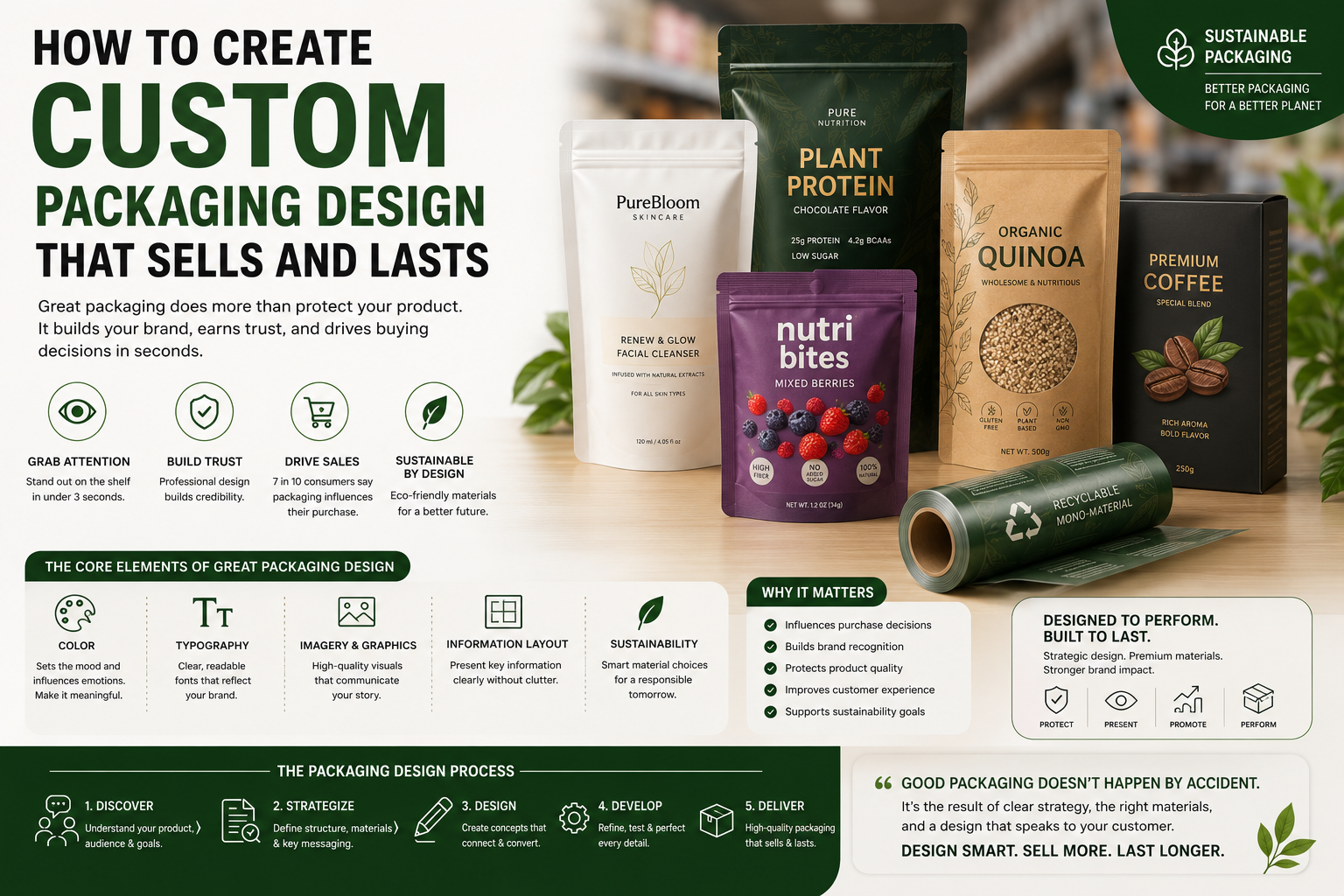
Your product could be the best thing on the shelf. But if the packaging doesn’t earn a second look, most shoppers will never find out. Buying decisions happen fast, often in under three seconds, and packaging is doing most of the heavy lifting in that moment. That’s the real job of custom packaging design.
Whether you’re launching a new product or rethinking your brand’s look, packaging is one of the biggest decisions you’ll make. It protects your product, yes. But it also tells your story, builds trust, and influences buying decisions before the customer has even read a single word.
This guide breaks down everything you need to know, from materials and structure to branding and sustainability, so you can design packaging that actually works, on the shelf and in the long run.
Why Custom Packaging Design Matters More Than You Think
Most people think packaging is just the wrapper, something to get torn off and thrown away. But packaging is a business tool. It’s marketing, logistics, brand identity, and customer experience all rolled into one.
According to a study by the Paper and Packaging Board, 7 in 10 consumers say packaging design influences their purchasing decision. That’s your packaging doing the talking before a single word gets read. If it looks cheap, the product feels cheap. If it looks professional and considered, customers assume the product inside is worth the price.
For businesses dealing in food, cosmetics, electronics, or consumer goods, the stakes are even higher. Flexible Packaging has taken over many of these categories because it’s lightweight, cost-effective, and gives brands a wide canvas for design. But great materials alone don’t make great packaging. The design has to match.
Think of your packaging as a silent salesperson. It’s on the shelf 24/7, doing its job whether you’re there or not.
Start with Your Product and Audience, Not the Design
Here’s where a lot of businesses go wrong. They jump straight into colors and fonts before answering the most basic questions. Who is buying this? How will they use it? Where will it be sold?
Your target audience should drive every design decision. A protein supplement targeting gym-goers needs bold, confident design with strong typography. A skincare product aimed at women in their 30s needs something cleaner, softer, and more premium-feeling.
The retail environment matters too. Packaging for a supermarket shelf competes against dozens of similar products side by side. Packaging for an online store has to look good in a product photo and survive a shipping journey. These are different problems that need different solutions.
Before you call a designer or look at templates, write down these answers: Who is your customer? What do they care about? Where will they see and buy your product? What feeling should they get when they pick it up? Good custom packaging design starts with these answers, not with a mood board.
How to Design Packaging: Structure Comes Before Style
Once you know your audience and channel, the next step is structure. What kind of packaging do you actually need?
This depends on your product category, weight, fragility, and shelf life. A powdered supplement might work great in a stand-up pouch. A liquid product might need a more rigid container. A snack food brand might lean toward Flow Wrap Packaging for its clean, film-wrapped look and strong barrier properties.
Some of the most common structures in flexible packaging include pouches, sachets, bags, and wraps. Each has different sealing, storage, and display properties. Getting this wrong can lead to leaks, damaged products, or customer frustration, none of which helps your brand.
Work with your packaging supplier early in the process. They can tell you what’s feasible for your product, what the printing limitations are, and which structures offer the best protection. Skipping this step and designing a beautiful package that can’t actually be manufactured is a waste of everyone’s time and money.
The Core Elements of Custom Packaging Design
Color
Color is the first thing people notice. It sets the mood and communicates without words. Red signals energy and urgency. Blue suggests trust and professionalism. Green communicates health, nature, and sustainability. Black adds a sense of premium quality.
Pick colors that align with your brand values and speak to your target customer. And make sure they work in print, because what looks good on a screen doesn’t always translate perfectly to a physical package. Always request a print proof before approving a full production run.
Typography
The fonts you choose say a lot about your brand. A luxury skincare brand might use a thin serif font. A children’s snack brand might use something round and playful. Whatever you choose, it needs to be readable at small sizes and on the actual material you’re printing on.
Hierarchy matters too. Your brand name, product name, and key benefits should be instantly clear in that order. If someone has to squint to figure out what a product does, the design has failed.
Imagery and Graphics
Photography, illustration, or patterns can add a lot of personality to packaging. But less is often more. Cluttered designs lose the eye. White space, used well, actually draws attention to what matters.
If you’re using product photography, make sure it’s high-resolution and shot professionally. Grainy or pixelated images on a package immediately lowers perceived quality, regardless of how good the actual product is.
Information Layout
Packaging has to include a lot of mandatory information: ingredients, usage instructions, certifications, barcodes, weight, and contact details. A good custom packaging design makes all of this readable without making the package feel like a legal document.
Front panels should focus on brand identity and key selling points. Technical and regulatory information can go on the back or sides. This is basic layout logic, but you’d be surprised how many brands get it wrong.
Packaging Design Services: Working with Professionals
Unless you have an in-house design team, you’ll be working with external packaging design services. And choosing the right partner makes a huge difference.
Look for designers or agencies that specialize in packaging, not just general graphic design. Packaging has technical constraints that general designers often don’t know about. Print bleed, color separation, structural limitations, and die-cut lines all require specific expertise.
Good packaging design services will ask you detailed questions about your product, market, and goals before putting pen to paper. They’ll provide mockups in context, meaning your product is visualized on a shelf or in someone’s hand, not just a flat file on a white background.
When reviewing proposals from packaging design companies, ask to see examples of work they’ve done for similar product categories. A strong portfolio in food packaging doesn’t automatically translate to expertise in cosmetics or industrial products.
Food Packaging Design: A Category with Its Own Rules
Food packaging design sits in a special category because the stakes are higher. Customers are literally putting your product in their bodies. Trust, safety, and freshness signals matter more here than almost anywhere else.
Color psychology is particularly powerful in food. Warm tones like red, orange, and yellow are known to trigger appetite. Greens and earth tones work well for organic and natural positioning. Blues, while great for other categories, are often avoided in food because they’re associated with mold in nature.
Beyond aesthetics, food packaging design has to communicate freshness. Phrases like ‘resealable,’ ‘airtight seal,’ or ‘stay-fresh technology’ reassure buyers. Custom Sachet Packaging is popular in the food industry for single-serve portions, condiments, and supplements because it controls portions and extends shelf life.
Certifications and claims also carry weight in food: organic, non-GMO, allergen-free, halal, kosher. If your product qualifies for any of these, make sure they’re clearly visible on the front panel. Customers scan for these before they read anything else.
Sustainable Packaging Design: Not Just a Trend
Sustainability has moved from a marketing checkbox to a genuine purchasing factor. A 2023 McKinsey report found that products making ESG-related claims grew 28% faster than those that didn’t over five years. Consumers, especially younger ones, are actively choosing brands that reflect their values, and packaging is the most visible proof point.
This doesn’t mean you have to sacrifice function or aesthetics. Modern Sustainable Packaging materials like recycled films, compostable pouches, and bio-based plastics have improved significantly. They can be printed on with the same quality as conventional materials and meet the same protection standards for most product categories.
When designing with sustainability in mind, think about more than just materials. Reduced packaging size cuts material use and shipping costs. Minimal layers make products easier to recycle. Clear recycling instructions on the package help consumers do the right thing.
Be honest in how you communicate your sustainability efforts. Vague claims like ‘eco-friendly’ without specifics are increasingly being called out. State exactly what the material is, what percentage is recycled, and how it should be disposed of.
Design Your Own Packaging: Where Strategy Beats Guesswork
When brands say they want to design their own packaging, what they usually mean is they want control over the outcome. That’s a reasonable goal. The issue is that packaging decisions made purely on aesthetic instinct, without a strategic brief, tend to miss the mark.
A design brief is not a creative limitation. It’s a business document that defines what success looks like before anyone opens a design tool. It should cover your target customer, the retail or sales environment, the product’s key differentiators, and any regulatory or material constraints. When the brief is clear, the design direction almost writes itself.
This is where many brands underinvest. They spend heavily on the product itself and treat packaging as a last-mile task. But the best packaging strategies are built in parallel with the product, not after it. Material selection, print method, and structural format all influence what’s possible in design, and those decisions need to happen early.
Whether you work with an in-house team or an external packaging design partner, the strategic thinking has to come from you. No designer can tell you who your customer is or what your brand stands for. That clarity is the foundation on which everything else is built, and it’s what separates packaging that sells from packaging that just sits there.
Product Packaging Design: Getting It Right for Different Categories
Different product categories have different expectations and different constraints. What works beautifully for a wellness brand might look completely wrong for a hardware product.
For personal care and cosmetics, minimalism tends to win. Clean layouts, premium finishes like matte lamination or foil stamping, and restrained color palettes communicate quality without shouting.
For snacks and beverages, energy and appetite appeal are the goals. Bright colors, bold fonts, and appetite-triggering imagery dominate this space. Stand-up pouches are common here because they display well and offer a large printable surface area.
For industrial or B2B products, clarity beats aesthetics. Technical specs, certification logos, handling instructions, and professional typography take priority over design flair.
Custom brand packaging for e-commerce has its own logic, too. The box or mailer your product arrives in is a brand moment. Unboxing videos have become a genuine marketing channel, and brands that invest in thoughtful e-commerce packaging often see that reflected in reviews and social shares.
Common Custom Packaging Design Mistakes to Avoid
Even experienced brands make these errors. Learning from them can save you time, money, and a product launch headache.
Designing for screen, not for print. Colors on a monitor are RGB and often look very different when printed in CMYK. Always do a physical proof before approving production. What looks vibrant on your laptop might come out dull on a pouch.
Ignoring print minimums and lead times. Packaging production has minimum order quantities and production schedules. If you’re launching a product, plan your packaging timeline at least 8 to 12 weeks before your launch date. Rushing leads to mistakes.
Overloading the front panel. Every brand wants to say everything at once. But cluttered front panels reduce clarity and lower shelf impact. Prioritize. What’s the one thing a customer needs to know in the first two seconds?
Not thinking about the full supply chain. Your Custom Mylar Bags might look perfect in a mockup, but how will they stack on a pallet? How do they fit in a retailer’s shelf space? Do they run cleanly through automated filling lines? These questions matter for production, not just for design.
Working with a Packaging Supplier That Understands Your Business
Your packaging supplier isn’t just a vendor. They’re a strategic partner. The right supplier will help you avoid expensive mistakes, suggest materials you haven’t considered, and keep your timelines on track.
When evaluating suppliers, look beyond price. Lead times, minimum order quantities, quality control processes, and design support are just as important. A supplier that can provide pre-press support and file review before going to print can save you from costly errors.
Contipack Inc. works with businesses across multiple product categories to deliver high-quality flexible packaging solutions with strong design support and reliable production timelines. Having that kind of end-to-end capability in one partner simplifies the process considerably.
Also, ask about scalability. Your needs today might be very different in 18 months. A supplier that can grow with you, offering small runs when you’re starting and larger volumes as demand increases, is more valuable than one locked into rigid order structures.
Final Thoughts
Great custom packaging design isn’t about being the most colorful box on the shelf or using the most expensive materials. It’s about understanding your customer, communicating your brand’s story clearly, and building packaging that holds up from the factory floor to the customer’s hands.
Start with structure, not style. Ask the right questions before you open a design tool. Work with experienced partners who understand both the creative and technical sides of packaging. And don’t treat sustainability as an afterthought. It’s increasingly the baseline expectation, not a bonus feature.
Whether you’re building a custom packaging design for a food brand, a wellness product, or an industrial application, the fundamentals are the same. Know your audience, design with intention, and choose materials and partners that match your quality standards.
Good packaging doesn’t happen by accident. It’s the result of a clear strategy, the right materials, and a design that speaks directly to the person picking it up. If your current packaging isn’t doing that job, now is the time to change it. Start with your brief, choose partners who know the industry, and build packaging that works as hard as the product inside it.