
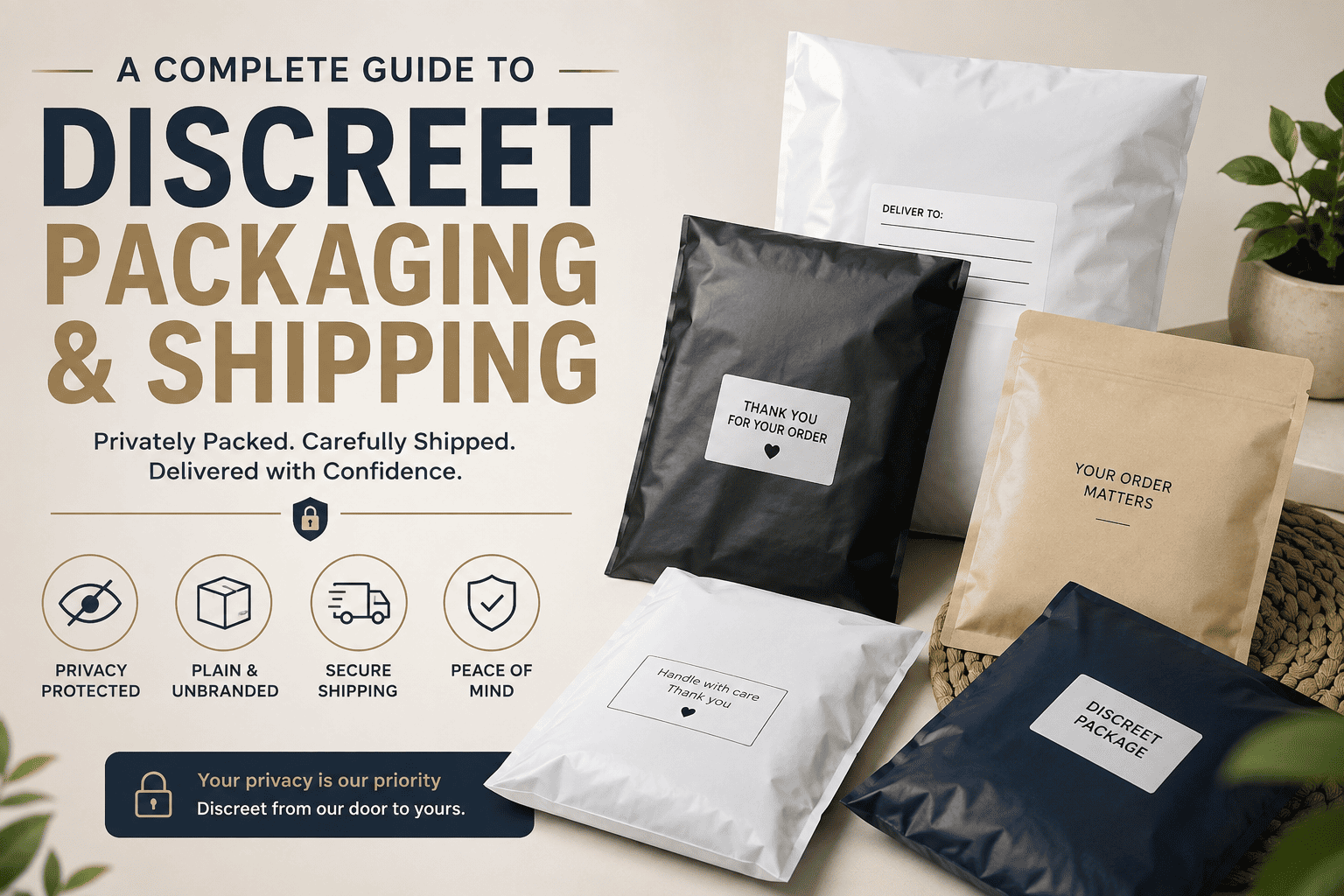
You order something online, track it obsessively for three days, and then it finally arrives. A plain brown box sitting on your porch with no logo, no product name, and a return address that tells you absolutely nothing. That is not a warehouse error. That is discreet packaging, and it is working exactly the way it is supposed to.
For a lot of shoppers, this is the difference between clicking buy and closing the tab. Nobody wants their roommate, their mail carrier, or their curious neighbor to know they just ordered a personal health product. Plenty of businesses have figured that out, which is why unbranded, privacy focused shipping has quietly become a standard offering across entire industries.
This guide covers everything you actually need to know. What the term means, what these packages look like in real life, which brands do it well, how it differs from the similarly spelled discrete packaging, and what to look for before you place an order.
What Is Discreet Packaging
Discreet packaging is a shipping approach where a company deliberately removes anything from the outside of a package that could reveal what is inside. That means no logos, no product photos, no catchy slogans, no category labels. Nothing that gives the game away to someone glancing at the box.
Think of it as the opposite of traditional retail shipping. Most brands want their box to be recognizable. They print their logo on the tape, use custom colored mailers, and treat the delivery as a branding moment. Discreet shipping flips that logic completely. The whole point is to blend in with every other unremarkable package on the doorstep.
It shows up most often in categories where privacy genuinely matters, including telehealth, prescriptions, wellness products, intimacy items, and certain subscription services. It is spreading beyond that too, partly because customers have started expecting it and partly because plain boxes are simply less likely to get stolen.
Breaking Down The Discreet Packaging Meaning
If you strip away the marketing language, the discreet packaging meaning comes down to one idea. Privacy by design. The packaging is planned from the outside in to protect the buyer, not to advertise the seller.
The word discreet itself means careful, tactful, or unobtrusive. Applied to shipping, it describes a package that draws no attention and invites no questions. It is not about hiding something shady. It is about giving people the same privacy they would have walking out of a store with an opaque bag.
Why the Discreet Package Meaning Gets Misunderstood
A lot of people assume discreet packaging is only for adult products. It is not. Someone ordering blood pressure medication, hair loss treatment, fertility supplements, or a therapy related product often wants that kept private too. The discreet package meaning has nothing to do with what is inside being embarrassing. It has everything to do with the buyer deciding who gets to know about it.
There is also a common assumption that discreet means unsecured or cheap. Also false. A discreet package is usually just as well sealed and protected as a branded one. The difference is purely cosmetic on the outside.
What Does Discreet Packaging Look Like
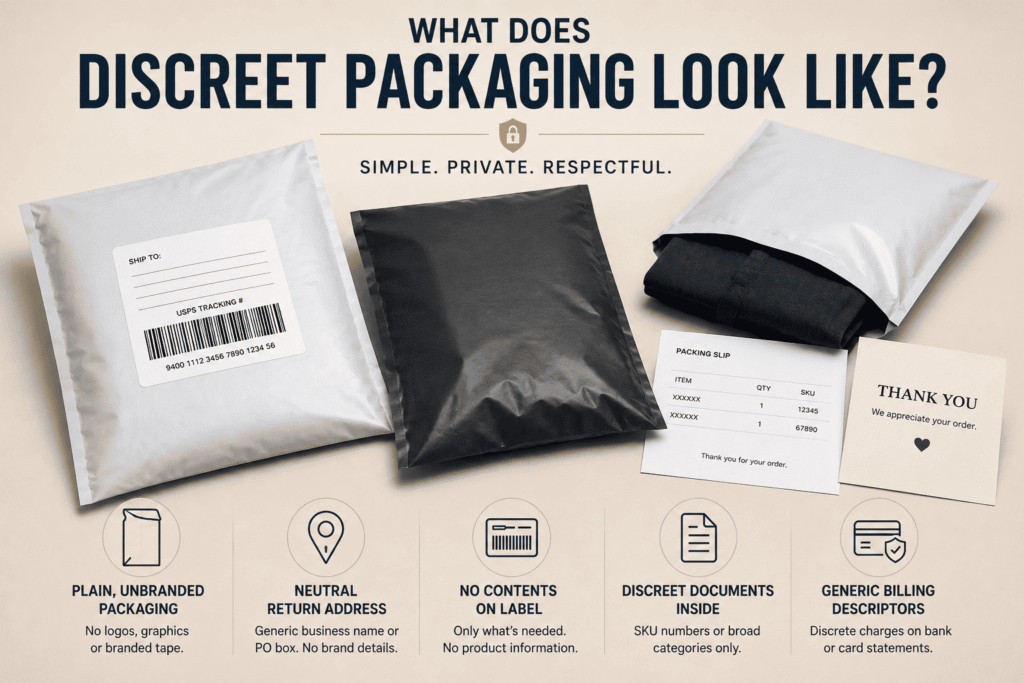
This is the question most people are really asking, so let us get specific. Here is what you will typically see when a company does this properly.
Plain, Unbranded Outer Packaging
Almost always plain brown corrugated cardboard or a solid colored poly mailer, usually gray, white, or black. No printed graphics, no product imagery, no branded packing tape. If there is tape, it is clear or plain.
For smaller items shipped without an outer box, brands often reach for flexible options instead. Unprinted mylar bags are a common choice because the opaque foil layer blocks light and hides the contents completely, even under a bright porch light.
A Neutral Return Address
The shipping label lists a generic business name rather than the actual brand. Sometimes it is initials only, sometimes it is the parent company or a fulfillment center name, and sometimes it routes to a PO box. If you searched the return address online, you often would not find anything meaningful.
No Contents Listed on the Label
You will not see words describing the product category anywhere on the exterior. The label sticks strictly to the essentials. Recipient address, tracking barcode, and postage. Nothing else.
Discreet Packing Slips Inside
Even the paperwork inside tends to stay vague. Instead of listing full product names, many companies use SKU numbers or broad category descriptions. That way, even if someone opens the box, the invoice does not immediately spell everything out.
Generic Billing Descriptors
This one matters more than people expect. For subscription products especially, the charge that appears on a bank or credit card statement is worded generically. Plenty of customers care more about what shows up on a shared statement than what shows up on the porch.
Discreet Packaging Options For Different Product Types
Not every product ships in a cardboard box, and the format you choose changes how private the delivery actually feels. Here is how the most common options compare.
Stand Up Pouches
Unprinted stand up pouches work well for powders, supplements, coffee, snacks, and small dry goods. They ship flat, weigh very little, and reveal nothing when left blank. Because they sit upright on a shelf once opened, they also give customers a reusable container without any branding on it.
Mylar Bags
Mylar is the go to material when light, moisture, and odor control matter as much as privacy. The foil barrier is fully opaque, so nothing shows through, and heat sealed edges keep the contents fully enclosed during transit. This is why so many wellness and supplement brands build their discreet packing around mylar bags.
Flat Bottom Pouches
For heavier or bulkier orders, flat bottom pouches hold more volume while staying stable during shipping. A plain unprinted version looks like ordinary packaging from any angle, which is exactly what you want. They also handle repeat opening and resealing better than lighter formats.
Plain Corrugated Boxes
Still the default for anything rigid, fragile, or awkwardly shaped. Cheap, widely available, and completely anonymous once you skip the printed tape.
Why Companies Use Discreet Packing
There is real business logic behind offering discreet packages. It is not just a courtesy.
- It removes a purchase barrier. Some people genuinely will not complete an order if they are worried about who might see the box, so discreet shipping eliminates that hesitation at checkout.
- It builds long term trust. When a customer sees that a brand handled their privacy carefully, they are far more likely to reorder and recommend it.
- It lowers theft risk. A plain box with no visible branding or value signal is a much less appealing target for package thieves than one that clearly advertises electronics or luxury goods.
- It protects sensitive health information. For anything medical, unmarked shipping is not a bonus feature. It is close to a baseline expectation.
- It reduces returns and complaints. Fewer awkward situations means fewer refund requests tied to someone else opening a package.
What Is Discreet Shipping Compared To Discreet Packing
These phrases get used interchangeably, but there is a useful distinction worth knowing.
Discreet packing, or discreet packaging, refers specifically to the physical box, pouch, or mailer. The tangible thing that arrives at your door.
Discreet shipping is the broader term. It covers the entire journey. How the item is packed, how the label is printed, what the sender name says, what the tracking notification displays, and how the charge appears on your statement.
So when someone asks what is discreet shipping, the accurate answer is that it is an end to end process, not just a box. A company can technically use a plain box while still emailing you a tracking notification with the full product name in the subject line, which defeats the purpose entirely. Real discreet shipping closes all those gaps.
A Real Discreet Packaging Example Worth Knowing
Seeing a real discreet packaging example makes this click faster than any definition.
Hims Discreet Packaging
The most frequently cited example is Hims discreet packaging. Hims, a telehealth company focused on men’s health and wellness, ships orders in plain, unbranded boxes with no indication of what is inside. The billing descriptor also avoids naming specific products, so neither the delivery nor the statement reveals the purchase. It has become something of a benchmark, and a lot of newer health brands have copied the approach almost step for step.
Online Pharmacies and Telehealth Platforms
Digital pharmacies routinely ship prescriptions in sealed, unmarked packaging. In many cases this overlaps with medical privacy obligations, so the standard is high by necessity rather than choice.
Personal Care Subscription Boxes
Subscription brands in the intimacy and personal care space typically use generic mailers with no external branding, plus vague packing slips and neutral card descriptors.
Everyday Retailers Offering It as an Option
Some mainstream retailers now offer discreet packages as a checkout option, even for products that are not sensitive at all. Useful for gifts, surprises, and anyone who simply prefers privacy.
How Stealth Packaging Differs
You will likely run into the term stealth packaging while researching this. It is related, but the intent is not identical.
Stealth packaging describes shipping methods designed to avoid attention altogether, often for products in restricted or gray area categories. The emphasis is on the package being undetectable as anything unusual, sometimes including odor control, vacuum sealing, or extra internal layers.
Discreet packaging, by comparison, is about customer comfort and privacy for ordinary sensitive purchases. Both use similar tools such as plain boxes, vague labels, and neutral sender names, but stealth packaging tends to go further and it is usually a response to a different kind of concern.
How To Tell If A Company Actually Offers Discreet Shipping
Before you order, check these five things.
- Look for it in the FAQ or shipping policy. Reputable companies state it plainly rather than hinting at it.
- Check what the return address will say. Good policies specify the exact generic name that appears on the label.
- Read the billing descriptor policy. If it is not mentioned, assume the brand name will appear on your statement.
- Check the tracking notification wording. Some carriers auto populate product descriptions, which can undo everything else.
- Read recent reviews. Customers almost always mention it when packaging is more obvious than promised.
If a company cannot answer these clearly, it probably treats discreet packaging as a marketing phrase rather than an actual process.
Setting Up Discreet Packing For Your Own Business
If you sell in a sensitive category, here is a practical starting checklist.
- Use plain, unbranded exterior packaging with no printed logos, custom tape, or graphics.
- Choose a format that suits the product, whether that is unprinted pouches for lightweight goods or plain boxes for rigid items.
- Register a neutral business name specifically for shipping labels.
- Keep packing slips vague, using SKU codes rather than descriptive product names.
- Confirm your payment processor’s billing descriptor does not reveal the product or category.
- Audit your automated emails and tracking notifications for revealing subject lines.
- Place a real order yourself and evaluate the full experience exactly as a customer would.
That last step catches more problems than the others combined. Plenty of brands discover their discreet shipping falls apart at the confirmation email stage.
Does It Cost More
Usually not much. Plain packaging is often cheaper than custom printed versions because you skip plate setup and printing costs entirely. The real cost is operational, meaning separate label templates, a secondary business name, and adjusted invoicing. For most small and mid sized sellers, the conversion lift more than covers it.
Frequently Asked Questions
1. Will the delivery driver know what is inside?
No. The driver sees the same plain package you do. Address, tracking barcode, postage. Nothing about the contents is visible to anyone handling it in transit.
2. Can I request discreet shipping if a store does not advertise it?
Sometimes. Smaller sellers and independent shops will often accommodate a request left in the order notes or sent by email before fulfillment. Large retailers with automated warehouses usually cannot make one off exceptions, since packaging is standardized across every order.
3. Does discreet packaging affect delivery speed?
Not really. The order is packed and shipped through the same carriers on the same timelines. In rare cases a company may add a day for orders requiring special handling, but standard discreet packing does not slow anything down.
4. Is the packaging still secure and protected?
Yes. Removing branding has nothing to do with structural protection. Discreet packages use the same cushioning, sealing, and void fill as regular shipments, and fragile or temperature sensitive items are handled with the same care.
5. What if the package gets opened by someone else?
This is exactly why vague packing slips matter. A well executed discreet package keeps the contents unidentifiable even after opening, at least at a glance, because the invoice uses SKU codes rather than descriptive names.
6. Do all countries allow discreet packaging?
Domestically it is straightforward almost everywhere. International shipping is trickier, since customs forms legally require an accurate contents description. That form is attached to the outside of the package, so cross border orders are inherently less private than domestic ones.
Final Takeaway
At its core, discreet packaging is about respect. It is a deliberate decision to strip away branding so customers can buy personal or sensitive products without worrying who sees the box, the label, or the bank statement.
Whether you came here searching for the discreet packaging meaning, wondering what does discreet packaging look like, comparing discreet and discrete packaging, or looking up a specific example like Hims, the answer lands in the same place. It is privacy handled thoughtfully, from checkout all the way to your doorstep.
For shoppers, it means you can order what you need without a second thought. For businesses, offering genuine discreet shipping is not an optional extra anymore. It is frequently the thing that turns a hesitant browser into a paying customer.