
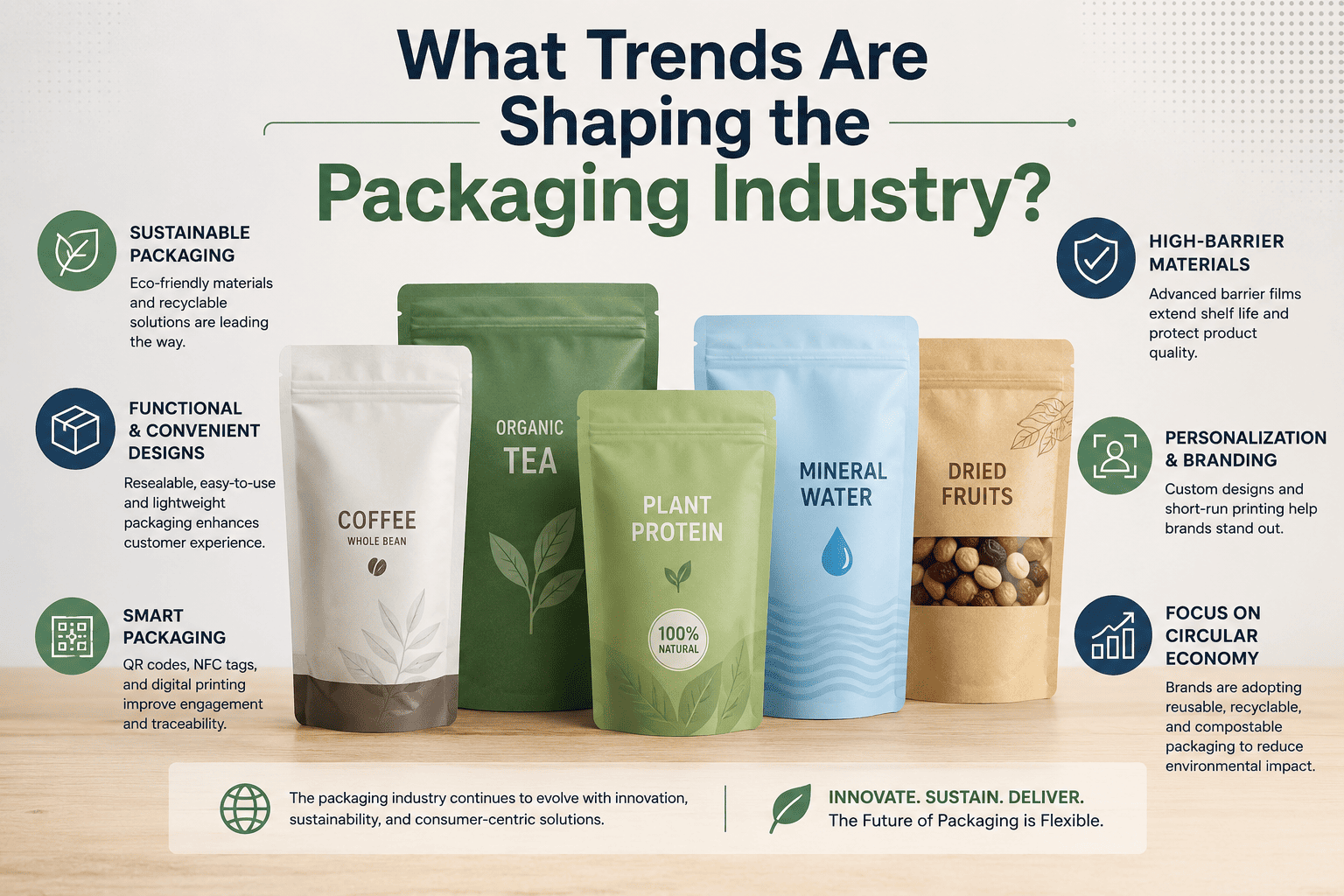
Packaging is changing faster than most people realize. New rules around recycling, the rise of online shopping, and pressure to cut waste are all pushing the flexible packaging industry to rethink how products are wrapped, shipped, and sold.
If you make, sell, or ship products, these changes affect you directly. Below is a simple, no-jargon look at what’s really happening in flexible packaging right now, and what it means for your business.
1. Recyclable Packaging Is Becoming the Standard, Not the Exception
For a long time, eco-friendly packaging was something brands did to stand out. That’s no longer true. Many states now have laws that require companies to use packaging that’s easier to recycle, and more of these laws are coming.
Because of this, more brands are switching to packaging made from a single type of material instead of several materials glued together. Single-material packaging is much easier to recycle, because it doesn’t need to be separated before it goes through a recycling machine.
This shift isn’t just about following rules. Customers are paying closer attention to how their purchases are packaged, and a growing number of them actively choose brands that use less wasteful materials. That means packaging is no longer just a protective layer, it’s becoming part of how customers judge a brand.
Why This Matters to You
If your packaging currently uses multiple layers of different materials, it’s worth checking whether a simpler, single-material version could work just as well. In many cases, it now protects products just as effectively while making recycling easier and helping you stay ahead of new regulations.
Getting Started Without a Full Redesign
Switching materials doesn’t have to mean starting from scratch. Many brands begin by testing a single-material version of their current pouch or bag alongside their existing packaging, comparing shelf life, durability, and cost before rolling it out fully. A packaging partner familiar with flexible packaging materials can usually tell within a short consultation whether your product is a good fit for this kind of switch.
2. Products Are Staying Fresh Longer, Without Extra Plastic
In the past, the materials that kept food and other products fresh the longest were often the hardest to recycle. That trade-off is fading.
New film technology now allows packaging to keep products fresh and protected while still being recyclable. This is especially useful for food, drinks, and medicine, where freshness and safety cannot be compromised.
In short: brands no longer have to choose between “safe and fresh” and “good for the planet.” Newer materials are increasingly built to do both, and the gap between the two options keeps narrowing every year.
How Barrier Technology Has Improved
Older packaging often relied on thick, multi-layered materials to block out moisture, air, and light. Today’s films can achieve similar protection using thinner, simpler structures. That means less raw material is used overall, even while the product inside stays protected just as well, sometimes better, than before.
3. Packaging Is Being Made Faster and Smarter, Thanks to Automation
It’s not just the materials that are changing, it’s also how packaging gets made. Factories are using more automated machines and computer systems to produce packaging faster, with fewer mistakes and less waste.
This is also opening the door to more customized packaging, even for smaller order sizes. In the past, custom packaging only made sense for huge orders. Now, thanks to automation, smaller brands can get custom-designed packaging too, without waiting months or paying a premium.
What This Means for You
Faster production means shorter wait times between placing an order and receiving your packaging. It also means more flexibility if you want to update your design, run a limited edition, or test a new package size.
Design Is Becoming Part of the Automation Story
Automation isn’t limited to how packaging is produced, it’s changing how packaging looks, too. High-resolution digital printed pouches allow brands to print vibrant, detailed designs directly onto flexible packaging, without the long setup times or high minimum order quantities that older printing methods required.
This matters most for brands that want to:
- Launch seasonal or limited-edition packaging
- Test different designs before committing to a full production run
- Personalize packaging for different retailers or regions
- Update artwork quickly in response to trends or promotions
Because digital printing doesn’t require new printing plates for every design change, brands can experiment more freely and bring new packaging to market much faster than traditional printing allowed.
4. Online Shopping Is Creating a Whole New Kind of Packaging
Online shopping has changed what packaging needs to do. A product sold in a store just needs to look good on a shelf. A product sold online needs to survive trucks, warehouses, and doorstep drop-offs, and still arrive in good condition.
This is why lightweight, durable pouches and mailers are becoming so popular. They protect the product, they cost less to ship because they weigh less, and they can still be designed to look great when the customer opens the box, something many online brands now treat as part of their marketing.
Should You Use Different Packaging for Online and In-Store Sales?
If you sell in both places, it’s worth asking whether one package design can really do both jobs well. Often, a packaging format built specifically for shipping performs better and saves money in the long run, even if it looks a little different from your retail packaging.
The Unboxing Moment Is Now Part of Marketing
For many online brands, the moment a customer opens their package has become almost as important as the product itself. Custom printed pouches with strong branding, clear messaging, and a memorable look can turn a simple delivery into a shareable moment, especially on social media, where unboxing videos and photos have become a genuine source of free marketing for brands that get their packaging design right.
5. Smart Packaging Is Becoming More Common
Packaging can now do more than just hold a product. Some flexible packaging includes built-in features that:
- Keep oxygen out to help food last longer
- Change color to show when a product is no longer fresh
- Resist bacteria growth
- Include tags that let companies track where a product is in the supply chain
This kind of packaging used to be rare and expensive. It’s now becoming much more common, especially for fresh food, medicine, and other products where freshness and tracking really matter.
Why Smaller Brands Are Starting to Use It Too
Smart packaging was once limited to large manufacturers because of cost. As production has scaled up across the industry, prices have come down enough that mid-sized and even smaller brands are now able to add some of these features, particularly freshness indicators, without a major increase in packaging cost.
6. Using Less Material Is Saving Money and Reducing Waste
One trend that keeps showing up across the industry is simple: using less material without losing performance. This is often called lightweighting, and it benefits everyone.
Less material means:
- Lower cost to produce the packaging
- Lower shipping costs, since lighter packages cost less to move
- Less waste overall
This is a big reason more brands are switching from rigid packaging, like bottles and boxes, to flexible packaging, like pouches and film-based bags. Flexible packaging generally uses less material, takes up less space in shipping and storage, and can still look just as attractive on a shelf.
A Simple Way to Compare the Impact
Think about how many rigid bottles fit in a shipping box versus how many flexible pouches fit in the same space. Pouches are typically flatter and stack more efficiently before they’re filled, which means fewer trucks, fewer shipments, and lower fuel and freight costs across the supply chain, savings that add up quickly at scale.
7. Packaging Needs Are Different Depending on Where You Sell
If your business sells products in more than one country or region, it’s important to know that packaging rules and recycling systems are not the same everywhere. What works well in the U.S. might not meet requirements elsewhere.
As more companies expand into new markets, they’re learning that packaging strategy has to be adjusted region by region, not copied and pasted. This includes not just labeling and language, but the actual materials used.
Planning Ahead for Multi-Region Sales
If regional expansion is on your roadmap, it’s worth building flexibility into your packaging strategy early. Choosing a flexible packaging partner who understands regional material and recycling requirements can save significant time and rework later, rather than discovering compliance issues after you’ve already launched in a new market.
8. Innovation Started in Food Packaging, And It’s Spreading
Food and drinks are still the biggest users of flexible packaging, and most new packaging ideas are tested there first. But increasingly, those same ideas, like better recycling, freshness technology, and smart tracking, are moving into other industries too, including personal care, household products, and healthcare.
This means innovation is now spreading faster across industries than it used to. If a new packaging idea works well for food, it often shows up in other product categories within a year or two.
Why This Cross-Industry Movement Matters
If your industry hasn’t traditionally used advanced flexible packaging, that’s likely to change soon. Brands that stay ahead of this shift, rather than waiting for it to become standard, often gain a head start on both sustainability credentials and shelf appeal compared to competitors who wait.
Frequently Asked Questions
1. What is flexible packaging?
Flexible packaging refers to packaging made from materials like film, foil, or plastic that can bend and shape around a product, such as pouches, bags, and wraps. It’s different from rigid packaging, like bottles, jars, or boxes, which keep a fixed shape.
2. Why is sustainable packaging becoming more important?
New laws in many states now require packaging to be more recyclable, and customers increasingly prefer brands that use less wasteful packaging. Businesses that don’t adapt may face compliance issues or lose customer trust over time.
3. Is recyclable packaging as strong and protective as regular packaging?
In most cases, yes. Packaging technology has improved significantly, so many recyclable and single-material options now offer the same level of protection and freshness as older, harder-to-recycle materials.
4. Do I need different packaging for online sales versus retail stores?
Not always, but it’s worth considering. Packaging sold online needs to survive shipping and handling, while retail packaging mainly needs to look good on a shelf. A format built specifically for shipping often performs better and can reduce shipping costs.
5. What is “smart” or “active” packaging?
This is packaging with built-in features that do more than just hold a product. Examples include materials that keep food fresher for longer, indicators that show when a product has expired, or tags that help track a product through the supply chain.
6. How can I make my packaging more sustainable without increasing costs?
Switching to single-material (mono-material) packaging is one of the most cost-effective ways to improve recyclability, since it often reduces material use as well. A packaging partner can help assess whether your current design can be simplified without sacrificing performance.
7. What’s the benefit of digital printing over traditional printing for packaging?
Digital printing allows brands to produce smaller batches, update designs quickly, and skip the setup costs tied to traditional printing plates. This makes it easier to launch limited editions, test new designs, or personalize packaging without a large upfront investment.
Final Thoughts
Packaging decisions today are more important than they used to be. It’s not just about how a product looks, it’s about whether the packaging meets new regulations, survives the shipping process, keeps products fresh, and supports your brand at the same time.
Whether you’re exploring more sustainable materials, considering digital printed pouches for your next product launch, or simply want to understand how modern flexible packaging could work better for your business, these are decisions worth getting right the first time.
At ContipackInc, we help businesses make sense of these changes and choose packaging that works, not just for today, but for where the industry is heading next.