
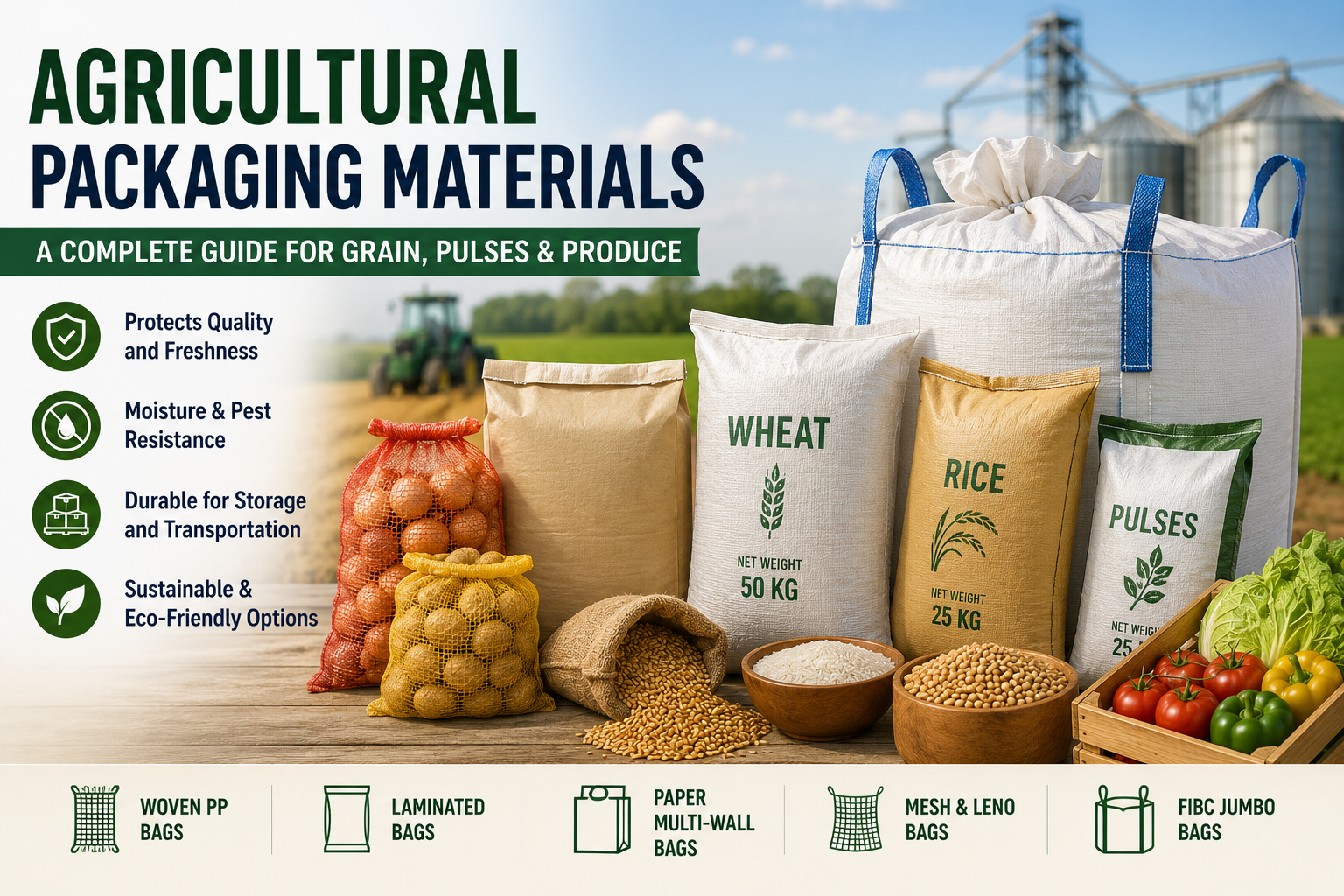
Agricultural packaging materials include woven polypropylene bags, laminated sacks, mesh produce bags, paper multi-wall bags, and FIBC bulk bags used to protect grain, pulses, fruits, and vegetables during storage, transportation, and distribution.
Agricultural packaging materials do a lot more work than most buyers realize. A bag that looks like a simple sack is often engineered to handle stacking weight, resist moisture, allow airflow, and survive a truck ride over rough roads, all without letting pests or contamination anywhere near the harvest. Whether you’re moving wheat from a mill, pulses from a processor, or fresh produce from a farm, the packaging decision affects spoilage rates, shipping costs, and how the product looks by the time it reaches a shelf.
This guide breaks down the materials that actually work for grain, pulses, and fresh agricultural produce, and how to think through the tradeoffs between strength, breathability, and cost. Whether you call it packaging materials for agricultural products or agricultural packaging solutions, the underlying decision is the same: match the material to what the product needs to survive between harvest and end use.
What Are Agricultural Packaging Materials?
At the most basic level, these are the films, wovens, and laminates used to hold, protect, and transport farm products from harvest to end use. The category covers woven polypropylene sacks, laminated multi-wall bags, mesh and leno bags for fresh produce, and jumbo FIBC bulk bags for high-volume shipments.
Each material solves a different problem. Agriculture & Produce packaging isn’t a single format; a bag built for grain storage handles very different stresses than a bag built for fresh tomatoes on a truck. Grain needs protection from moisture and pests over months of storage. Fresh produce needs airflow so it doesn’t rot before it reaches a buyer. Getting this distinction right early saves a lot of rework later.
Choosing the right materials for packaging agricultural products starts with a handful of practical questions, not a catalog of options. How long will the product sit in storage before it moves? What’s the climate at both the origin and destination? Will the bag be handled by machines, by hand, or both? Storage duration is often the biggest factor, since longer storage windows call for stronger moisture barriers and, in many cases, added pest-resistance treatments built into the bag itself.
Types Of Agricultural Packaging Materials
Agricultural packaging isn’t a one-material category. Different formats exist because different products, climates, and handling methods demand different structures. Here’s how the main types break down.
1. Woven Polypropylene Bags
Woven polypropylene, often just called PP, is the standard material used across most of the agricultural packaging industry because it balances strength, cost, and moisture resistance well. These bags handle stacking on pallets and rough handling during transport without tearing, and they hold up in warehouse conditions for extended periods. Most bulk grain bags in circulation today are built on this base material, and Grain and Pulses shipments moving through variable climates rely on this format as the starting point before any added lamination.
2. Laminated Woven Bags
For grain that needs extra protection, laminated woven bags add a thin plastic film layer bonded to the woven fabric. This layer blocks moisture and dust far better than plain woven material alone, which matters for wheat, rice, and corn stored for months before use. Shipments moving through humid climates benefit the most from this laminated construction, since untreated woven bags alone can let moisture through during a long monsoon season.
3. Paper Multi-Wall Bags
Paper multi-wall bags are still used for some grain applications, particularly where a more natural look matters for branding. They’re biodegradable and print well, but they don’t hold up as well against sustained moisture exposure, so they work best for shorter storage periods or drier climates.
4. Mesh and Leno Bags
Mesh and leno bags are built for airflow rather than sealing. Fresh Vegetables & Fruits move through these breathable structures far better than through any sealed format, since produce is biologically active after harvest and needs ventilation to avoid trapping the gases that speed up decay.
5. FIBC Jumbo Bags
FIBC jumbo bags handle the highest-volume end of agricultural shipping, often carrying half a ton or more of grain, pulses, or bulk produce in a single unit. They’re designed for forklift handling and long-distance transport, and they remain one of the most cost-efficient formats for large-scale agricultural storage bags moving between farms, mills, and processors.
Best Packaging Materials for Grain
Grain packaging bags need to prioritize moisture resistance above almost everything else, since stored grain that picks up ambient humidity is prone to mold and quality loss within weeks. Woven PP with a laminated moisture barrier remains the most reliable choice for bulk grain moving through variable climates.
For mid-scale distribution, like a wholesaler supplying grocery chains, packaging usually shifts toward laminated woven bags in the 25 to 50 kilogram range. At the retail level, packaging shifts toward printed, smaller-format bags, often with a resealable feature, since these bags are handled directly by consumers rather than forklifts. The material stays largely the same across all three scales, woven PP with a moisture barrier, but the bag size, printing, and closure method change based on who’s opening it.
Packaging Solutions for Pulses
Pulses packaging material has its own set of demands. Lentils, chickpeas, and beans are more prone to insect infestation than whole grains, so packaging often needs an added layer of pest resistance built into the bag structure or applied as a treatment.
Woven PP bags with an inner liner are common here. The liner, usually a thin polyethylene film, adds a moisture and pest barrier that plain woven fabric can’t provide on its own. This combination keeps pulses food-safe and shelf-stable through longer storage and export shipping timelines, where humidity and temperature swings are harder to control.
Retail-sized pulses packaging has shifted toward printed stand-up pouches with resealable zippers over the last several years, since consumers increasingly want a package they can reclose after opening. Print quality matters more at retail than most buyers expect going in, since a bag sitting next to a dozen competitors on a grocery shelf needs sharp branding without compromising the barrier properties underneath it.
Packaging for Fresh Fruits and Vegetables
Fresh produce needs the opposite approach from dry grain. The moisture-proof produce packaging logic used for grain doesn’t translate well to fruits and vegetables, which need controlled airflow through mesh or micro-perforated films that let the product breathe while still protecting it from dust, insects, and physical damage during transport. Getting this balance wrong is one of the most common mistakes new packaging buyers make when they assume all produce packaging materials need the same sealed, moisture-proof treatment.
This split shows up clearly in specialty categories too. Popcorn Packaging needs a strong moisture barrier similar to grain, since kernels that absorb ambient humidity won’t pop properly, while a fresh vegetable destined for a supermarket produce section needs ventilation built directly into the bag design. Buyers who default to one produce packaging material across their entire product line usually end up with either soggy produce or grain that’s picked up moisture it shouldn’t have.
Even outside the food chain, this same logic applies. Lawn & Garden Packaging for products like seed, mulch, or potting soil borrows heavily from grain packaging principles, using heavy-duty woven bags that resist tearing and moisture while standing up to outdoor storage and rough handling at garden centers.
Moisture-Proof Agricultural Packaging
Moisture control is where agricultural packaging materials succeed or fail. Too little protection and grain molds or pulses attract pests. Too much sealing and fresh produce suffocates, trapping ethylene gas and accelerating spoilage instead of preventing it.
For dry commodities like grain and pulses, moisture-resistant packaging usually gets its barrier from a polyethylene film laminated to a woven or paper base. This film blocks water vapor from passing through the bag wall, which is the main mechanism by which stored grain picks up moisture from humid air or damp storage floors.
Multi-layer laminates go a step further for high-value or long-storage products, combining a woven strength layer with a barrier film and sometimes a foil layer for maximum protection. Dried Fruits & Nuts Packaging relies heavily on this multi-layer approach, since these products are especially prone to rancidity when oxygen and moisture both reach the product at once. A bag that only blocks moisture but lets oxygen through still leaves the product exposed to quality loss over time.
How to Choose An Agricultural Packaging Supplier?
Picking an agricultural packaging supplier comes down to a few practical checks: material capability, minimum order quantities, and whether the supplier can produce both bulk and retail formats under one roof. A supplier that only does woven PP sacks isn’t much help if a brand also needs printed retail pouches for pulses or mesh bags for produce.
Lead times matter more in agriculture than in most other packaging categories, since harvest and shipping seasons are fixed by nature, not by production schedules. A supplier that can’t turn around an order before a harvest window closes isn’t a viable long-term partner, regardless of price.
Certifications and food-grade agricultural bags documentation are worth asking for directly rather than assuming a bag is safe because it looks similar to others on the market. This is especially important for pulses and grain destined for export, where importing countries often have their own packaging and labeling requirements.
A bulk grain bag manufacturer that runs its own extrusion and lamination lines can typically offer more flexibility on bag size, film thickness, and barrier construction than a distributor reselling stock sizes. This matters most for buyers with specific storage conditions, like high-humidity regions or long export transit times, where a standard off-the-shelf bag might not hold up.
Contipack Inc works with agricultural producers and distributors on custom woven and laminated bag structures, building the material specification around the actual storage and transport conditions the product will face rather than defaulting to a generic bag size.
Sustainable Agricultural Packaging Materials
Sustainability has become a bigger part of the conversation in agricultural packaging materials over the past few years, largely because woven polypropylene, while durable, doesn’t break down quickly in the environment. Buyers increasingly ask about recyclable mono-material woven structures and paper-based alternatives for shorter storage applications where the full moisture barrier of a laminated bag isn’t strictly necessary.
The tradeoff is usually durability versus environmental footprint. A fully recyclable paper bag works well for a domestic shipment moving a short distance in a dry climate, but it won’t hold up to a long export journey through humid ports the way a laminated woven bag will. Buyers who want to reduce environmental impact without sacrificing product protection often start by auditing which SKUs actually need the heaviest-duty packaging and which ones can move to a lighter, more sustainable format without added spoilage risk.
Frequently Asked Questions For Agriculture Packaging
1. What are agricultural packaging materials?
They’re the films, wovens, and laminates, including woven polypropylene bags, laminated sacks, paper multi-wall bags, mesh bags, and FIBC bulk bags, used to protect grain, pulses, and produce during storage and transport.
2. What packaging is used for grains and pulses?
Bulk shipments typically use woven PP sacks or FIBC jumbo bags, mid-scale distribution moves through laminated woven bags in the 25 to 50 kilogram range, and retail packaging shifts to smaller printed, often resealable, bags.
3. What material prevents moisture in agricultural packaging?
A polyethylene film laminated to a woven or paper base is the main moisture barrier for dry commodities. Multi-layer laminates, sometimes including a foil layer, add further protection for high-value or long-storage products.
4. Which packaging is best for fresh produce?
Mesh and leno bags or micro-perforated films work best, since fresh produce needs airflow rather than a full seal to avoid trapping the gases that speed up decay after harvest.
5. How do I choose an agricultural packaging supplier?
Check material capability across both bulk and retail formats, confirm lead times against harvest and shipping seasons, and ask directly for certifications and food-contact compliance documentation rather than assuming a bag is safe.
Final Thoughts
Choosing the right agricultural packaging materials comes down to understanding what the product actually needs to survive between harvest and end use. Dry grain and pulses need moisture and pest protection built into the bag structure. Fresh produce needs airflow and gentle handling instead of a hard seal. Getting this distinction right, and working with a supplier who understands the difference, keeps spoilage down and protects the value of a harvest all the way through the supply chain.
Buyers who treat packaging material selection as part of their agricultural operation, not an afterthought handled at the last minute before shipping, tend to see fewer losses and steadier quality across every batch they move. The upfront work of matching material to product, climate, and storage duration pays for itself many times over once a shipment reaches its destination in the same condition it left the farm.