
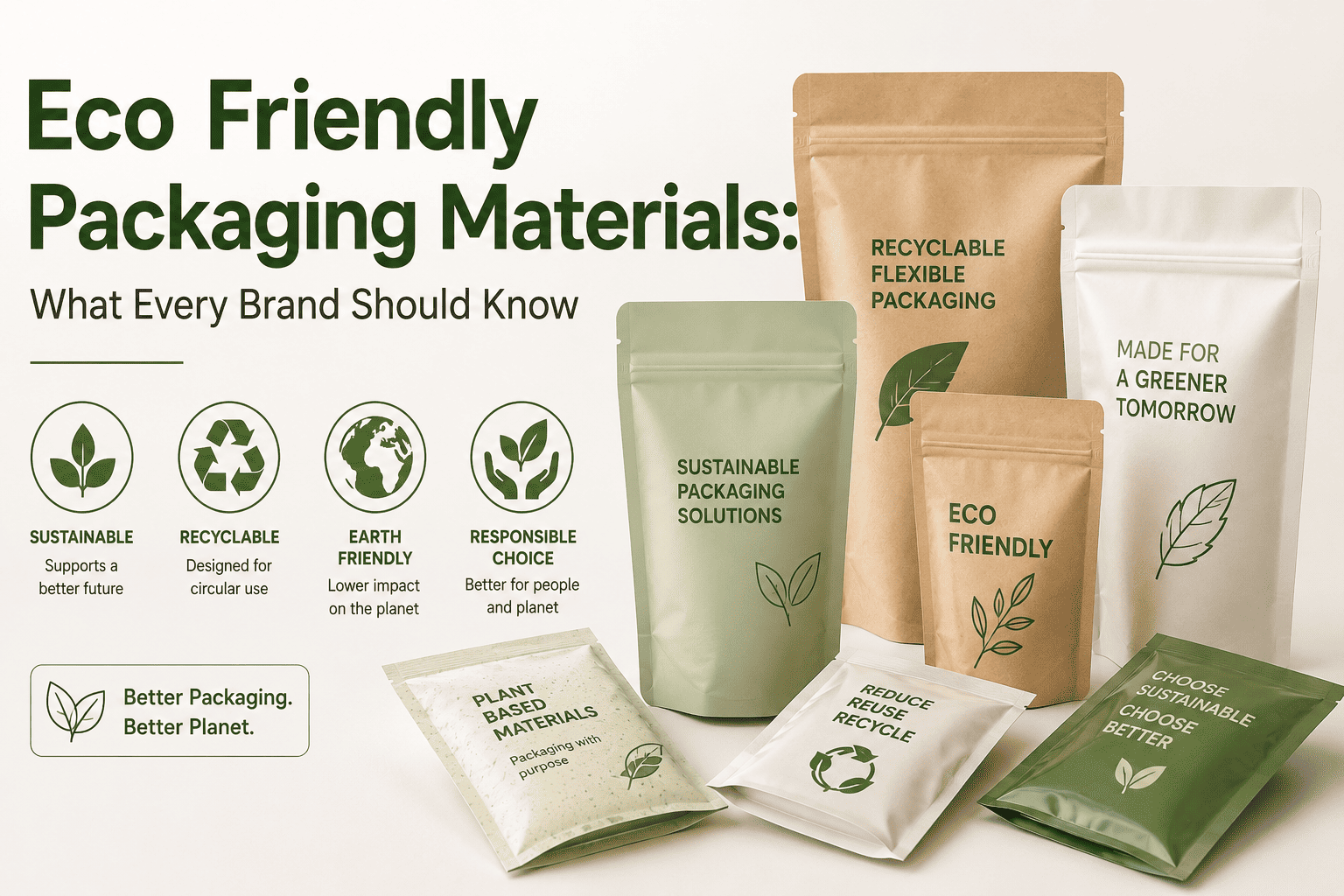
Walk into any grocery store today and you’ll notice something different from a decade ago. Bags feel thinner but sturdier. Boxes look plain but purposeful. Labels proudly announce “recyclable” or “compostable” in bold letters. This shift isn’t a passing trend, it’s a response to something bigger. Consumers are paying attention to what happens to packaging after they’ve unwrapped their product, and brands that ignore this shift are quietly losing ground to competitors who don’t.
Eco friendly packaging materials have moved from a niche concern to a business necessity. Whether you run a food brand, a skincare line, or a logistics company shipping thousands of orders a week, the packaging you choose now says as much about your values as your product does.
This guide breaks down what eco friendly packaging actually means, the different materials available, and how to choose options that work for your business without compromising protection, cost, or brand image.
Why Eco Friendly Packaging Matters More Than Ever
Packaging waste has become impossible to ignore. Landfills are filled with single-use plastics that take hundreds of years to break down, and ocean pollution linked to packaging waste has pushed both regulators and shoppers to demand change. Governments across the world are introducing extended producer responsibility laws, plastic bans, and recycling mandates, which means the pressure isn’t just coming from customers anymore it’s coming from legislation too.
But there’s also a simpler, more human reason this matters. People genuinely feel better about brands that show they care about the planet. A recent wave of consumer studies has confirmed what many marketers already suspected: shoppers are willing to pay a little more for products packaged responsibly, and they’re quick to call out brands that greenwash without real action.
For businesses, this creates a rare situation where doing the right thing and doing the profitable thing point in the same direction.
What Makes Packaging Truly Eco Friendly
Not everything labeled “green” deserves the title. Genuine environmentally friendly packaging typically checks a few boxes:
- It’s made from renewable, recycled, or biodegradable materials.
- It requires less energy and fewer resources to produce.
- It can be recycled, composted, or reused after its first life.
- It doesn’t release harmful chemicals during production or disposal.
A material only earns the “eco” label when its entire lifecycle sourcing, manufacturing, use, and disposal is considered, not just one stage of it. This is where a lot of packaging eco claims fall apart under scrutiny, and it’s why understanding the actual types of eco friendly packaging matters so much before making a switch.
Types Of Eco Friendly Packaging Materials
There isn’t a single “correct” sustainable material. The right choice depends on your product, your shipping method, and your customer’s expectations. Here are the main categories worth knowing.
1. Biodegradable Packaging Materials
Biodegradable packaging materials break down naturally through the action of bacteria, fungi, or other organisms, eventually returning to the earth without leaving toxic residue behind. Common examples include mushroombased packaging, cornstarchbased films, and certain paperbased mailers treated without synthetic coatings.
The appeal here is straightforward: once the packaging is discarded, nature takes over. That said, biodegradable doesn’t always mean it breaks down quickly in a landfill, so it’s worth checking how a material performs under realworld conditions rather than just lab settings.
2. Recyclable Packaging Materials
Recyclable packaging materials can be collected, processed, and turned into new products instead of ending up in a landfill. Cardboard, glass, aluminum, and certain plastics like PET and HDPE fall into this category. The catch is that recyclability depends heavily on local infrastructure; a material that’s recyclable in one city might not be accepted by facilities in another.
This is why many brands now print clear disposal instructions directly on their packaging, helping customers recycle correctly instead of guessing.
3. Compostable and PlantBased Materials
Compostable materials go a step further than biodegradable ones. They break down into nutrient-rich compost under specific conditions, usually within an industrial composting facility. Plant-based options think sugarcane pulp, bamboo fiber, or wheat straw are gaining popularity because they’re renewable and often require less water and energy to produce than traditional plastics.
4. Reusable and Refillable Packaging
Not all sustainability comes from what a material is made of. Sometimes it comes from how many times it can be used. Reusable containers, refillable pouches, and durable shipping totes reduce waste simply by extending a product’s lifecycle. Several skincare and cleaning brands have built entire business models around refill stations, and the model is spreading fast into food and personal care.
Popular Eco Friendly Packaging Material Examples
If you’re trying to picture what these materials look like in practice, here are a few eco friendly materials examples businesses are actively using:
- Kraft paper mailers for ecommerce shipping
- Molded pulp trays for electronics and fragile items
- Glass jars for cosmetics and food storage
- Corrugated cardboard boxes made from recycled fiber
- Bioplastic pouches derived from plant starches
- Compostable mailer bags replacing traditional poly mailers
Each of these serves a different purpose, and many brands end up mixing materials depending on the product category. A skincare brand might use glass jars for its serums but switch to compostable mailers for outer shipping.
Sustainable Food Packaging Materials: Special Considerations
Food packaging carries extra responsibility because it directly touches what people eat. Sustainable food packaging materials need to balance three things at once: safety, freshness, and environmental impact.
Options like compostable clamshells, wax paper alternatives, and plantfiber trays are becoming common replacements for polystyrene and singleuse plastic. Restaurants and food delivery services in particular have shifted toward these materials to meet both customer expectations and increasingly strict local regulations around single use plastics.
One thing worth noting: foodsafe eco packaging often costs slightly more upfront, but brands frequently recover that cost through customer loyalty and reduced regulatory risk down the line.
Green Packaging Supplies For Modern Brands
Sourcing green packaging supplies has become significantly easier over the past few years. Suppliers now offer everything from compostable tape and biodegradable bubble wrap to recycled cardboard boxes and plant-based void fill. This means businesses no longer have to choose between convenience and sustainability the supply chain has largely caught up with demand.
When sourcing suppliers, it helps to ask a few direct questions: Is the material independently certified? What percentage is postconsumer recycled content? Does the supplier provide documentation for sustainability claims? These questions separate genuinely eco packaging material from marketing dressed up as environmentalism.
Sustainable Flexible Packaging Choice
Among the many packaging formats available, flexible packaging has emerged as one of the most resourceefficient options on the market. Compared to rigid packaging, it typically uses less raw material, weighs less during transport, and generates a smaller carbon footprint across its supply chain. Brands in food, personal care, and pet products have increasingly adopted flexible formats because they offer strong product protection while cutting down on overall material use.
Modern flexible packaging is also evolving fast. Recyclable monomaterial films and compostable laminates are replacing older multilayer plastics that were difficult to process at end of life. This shift means brands can keep the practicality flexible packaging is known for while significantly improving its environmental profile.
Eco Friendly Stand Up Pouches
Two formats worth highlighting within flexible packaging are stand up pouches and flat bottom pouches, both of which have become goto choices for brands trying to balance sustainability with shelf presence.
Stand up pouches are popular for snacks, coffee, pet food, and personal care products because they use less material than rigid containers while still standing upright on shelves for strong visual branding. Many are now available in recyclable or compostable formats, giving brands a way to reduce plastic use without sacrificing the pouch’s practical shipping and storage advantages.
Eco Friendly Flat Bottom Pouches
Flat bottom pouches take this a step further by offering a wider base for better stability and a more premium look on retail shelves. They’re a favorite among coffee roasters, specialty food brands, and supplement companies that want packaging to feel substantial without relying on glass or heavy plastic. Because flat bottom pouches typically require less material than boxes or jars of similar volume, they naturally reduce a product’s overall packaging footprint.
Together, these two pouch styles show how flexible packaging formats can support both sustainability goals and strong shelf appeal, something rigid packaging often struggles to do at the same cost.
How To Choose the Right Eco Packaging For Your Business
With so many materials and formats available, choosing the right one can feel overwhelming. A few practical questions can simplify the decision:
What does your product need to survive shipping?
Fragile items may need more protective packaging, while durable goods have more flexibility to use lighter, minimal materials.
What’s your customer’s local recycling infrastructure like?
There’s little benefit in choosing recyclable packaging if your customer base doesn’t have access to facilities that accept it.
Does the material fit your brand’s price point?
Premium eco materials can elevate a luxury brand’s image, while budget conscious brands may benefit more from simple recyclable cardboard.
Can your supplier back up their sustainability claims?
Certifications like FSC, BPI compostable, or How2Recycle labeling add credibility that vague “eco friendly” language can’t.
Answering these questions honestly, rather than chasing whatever material is trending, leads to packaging decisions that actually hold up over time.
Is Eco Friendly Packaging Worth The Investment?
This is the question every business owner eventually asks, and it’s a fair one. Sustainable materials can carry a higher upfront cost than conventional plastic, and for businesses running on tight margins, that difference matters.
The way to think about it isn’t as an expense but as a long term investment in brand perception and customer retention. Studies on consumer behavior consistently show that shoppers, particularly younger generations, factor packaging into their purchasing decisions and are more likely to repurchase from brands that align with their values. There’s also a quieter financial benefit: lighter, more efficient eco packaging often reduces shipping weight and volume, which can offset material costs through lower freight expenses.
Regulatory trends add another layer to this. As more regions introduce plastic taxes, packaging waste fees, and extended producer responsibility programs, businesses that switch early avoid scrambling to comply later under tighter deadlines and higher costs. In that sense, eco friendly packaging isn’t just a marketing decision, it’s a way of futureproofing operations against rules that are only going to get stricter.
Common Mistakes Brands Make When Switching To Eco Packaging
Making the shift to sustainable materials sounds simple, but plenty of brands stumble along the way. A few recurring mistakes are worth avoiding.
Assuming all “green” materials are equal.
Not every plantbased or recyclable claim is backed by real data. Some materials marketed as eco friendly still require specialized industrial facilities to break down properly, facilities that most consumers don’t have access to.
Ignoring the customer’s disposal reality.
A compostable pouch is only useful if the customer has somewhere to compost it. Brands that overlook this end up with packaging that’s technically sustainable but practically useless once it reaches the end user.
Sacrificing product protection for sustainability.
Switching to a thinner or lighter material without testing it properly can lead to increased product damage during shipping, which creates more waste overall through returns and replacements the opposite of the intended outcome.
Overpromising in marketing copy.
Vague terms like “eco” or “green” without supporting certification can trigger greenwashing accusations, which damage trust faster than sticking with conventional packaging honestly labeled as such.
Avoiding these missteps usually comes down to testing materials thoroughly, being transparent with customers, and choosing suppliers who can verify their sustainability claims with real documentation.
Frequently Asked Questions
1. What is an example of packaging materials considered eco friendly?
Kraft paper, molded pulp, recycled cardboard, glass, and plantbased bioplastics are all common examples used across food, cosmetics, and shipping packaging.
2. Is flexible packaging more sustainable than rigid packaging?
In many cases, yes. Flexible packaging typically uses less material per unit, weighs less during transport, and generates a smaller carbon footprint, especially when made from recyclable monomaterial films.
3. Can stand up pouches be recycled?
It depends on the material. Traditional multilayer pouches are harder to recycle, but many suppliers now offer monomaterial or compostable stand up pouches designed for easier processing at end of life.
Final Thoughts
Eco friendly packaging isn’t a single material or a single decision, it’s an ongoing commitment that touches sourcing, production, shipping, and disposal all at once. Businesses that treat it as a genuine part of their brand strategy, rather than a checkbox to tick, tend to build stronger, more trusting relationships with their customers.
Whether that means switching to recyclable mailers, exploring compostable food containers, or adopting flexible packaging formats like stand up pouches and flat bottom pouches, the direction is clear. Sustainable packaging isn’t just better for the planet anymore it’s becoming what customers expect as the baseline, not the exception.