
Plastic waste keeps piling up, and more brands are asking a simple question. What if packaging could just be eaten instead of thrown away? That is the idea behind edible packaging, and it is no longer just a lab experiment. From candy wrappers to coffee cups, this kind of packaging is already showing up in real products on real shelves. This guide walks through what it actually is, the materials used to make it, some real examples, its benefits and limits, and where the idea is headed next.
What Is Edible Packaging?
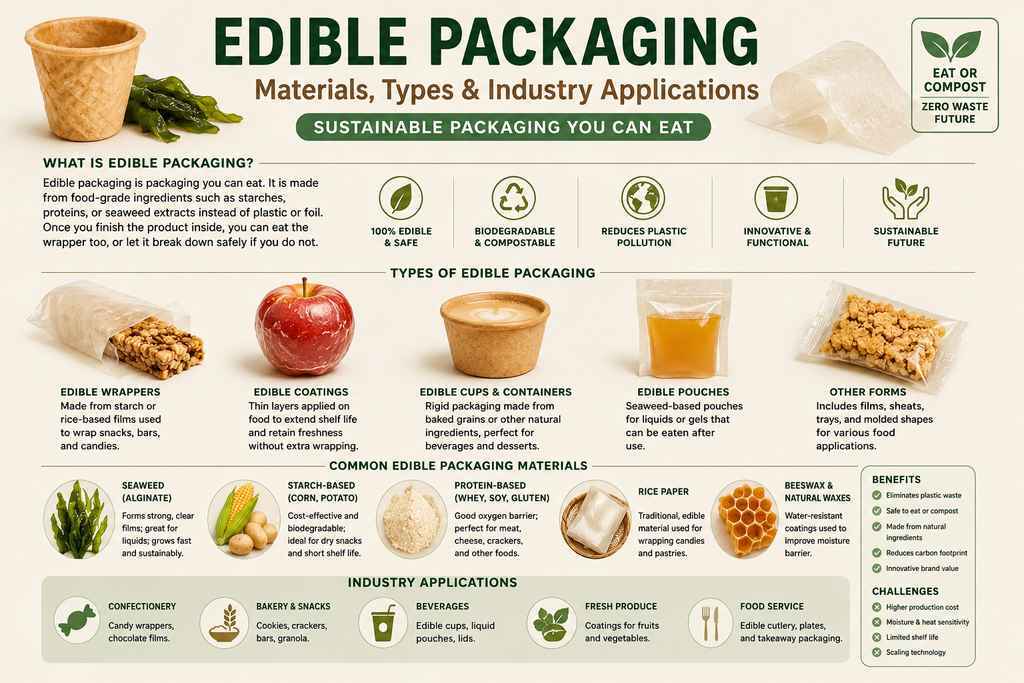
Edible packaging is packaging you can eat. It is made from food-grade ingredients such as starches, proteins, or seaweed extracts instead of plastic or foil. Once you finish the product inside, you can eat the wrapper too, or let it break down safely if you do not.
This matters because so much everyday packaging never gets recycled. A candy wrapper, a coffee cup lid, or a small sauce packet is hard to sort, and most of it ends up in a landfill. An edible package removes that problem completely, because there is nothing left over once the product is gone.
How It Works
Most of these materials start with a natural compound that can form a film or hold a solid shape. Common building blocks include polysaccharides like starch and cellulose, proteins like gelatin and whey, and lipids such as natural waxes. These get mixed with other food-safe ingredients to control texture, flexibility, and strength.
Manufacturers turn this mixture into a thin film, a coating, or a molded shape, depending on what the packaging needs to do. A wrapper for a candy bar needs to be thin and flexible. A cup meant to hold hot coffee needs more structure and a coating that resists moisture, since heat and steam behave very differently than a dry snack sitting on a shelf.
Why the Idea Is Catching On
Government rules on single-use plastic are getting stricter in many countries, and companies are under real pressure to find alternatives that actually work. Conventional wrapping relies heavily on plastic and foil to keep products fresh, yet a large share of it is never recycled once it reaches a landfill.
Shoppers are paying closer attention too, especially younger buyers who actively look for products that visibly cut down on waste. For a lot of companies, this shift is just one part of a bigger move toward Sustainable Packaging across their whole product line, not a standalone project sitting off to the side.
There is also something most eco-friendly materials cannot offer: this format is genuinely fun. A cup you can bite into or a wrapper you can eat sticks in people’s minds, and that is part of why brands in snacks, drinks, and quick service food have started testing it at scale.
Types Of Edible Food Packaging
Edible food packaging comes in more forms than most people realize. It is not just wrappers. The category includes films, coatings, rigid containers, and pouches built to hold liquid, each suited to a different kind of product and a different handling requirement.
Edible food wrappers are thin sheets used to wrap individual items like candy bars or oat-based snack bars, and brands rethinking their Granola Packaging are among the first to test these films at scale. They are usually made from starch or rice-based films, and they work much like paper wrapping, except you can eat them right along with the product instead of peeling them off first.
Coatings work a bit differently. Instead of wrapping around a product, a thin layer gets applied straight onto the food itself. Wax coatings on fruit are common, and bakeries rethinking Cookie Packaging have started testing similar edible coatings to keep soft cookies fresh without adding a separate wrapper at all.
Rigid formats include edible cups and small containers, often made from baked grain shells. Some coffee shops have tested edible cups, giving customers something they can finish right along with their drink instead of tossing a lid and a sleeve.
Edible pouches, often made from a seaweed-based membrane, hold liquid or gel until they are bitten open. In some ways, they mirror how flexible Stick Pack Packaging works in regular packaging, just without any plastic left behind once the contents are gone.
Common Edible Packaging Materials
Different materials suit different jobs, and picking the right one usually comes down to what the product needs to survive between the factory and the customer. Seaweed extract, known as alginate, forms strong, clear films that work well for liquids. It is popular because seaweed grows fast without needing fresh water or fertilizer.
Starch-based materials, often made from corn or potato, are cheap to produce and break down quickly. They tend to be more sensitive to moisture than other options, so they work best for dry snacks rather than liquids, or anything served hot.
Protein-based films, made from whey, soy, or gluten, do a solid job of blocking oxygen. That makes them useful for meat, cheese, and Cracker Packaging formats, where oxidation is the main thing shortening shelf life once a product has been packed and sealed.
Rice paper is one of the oldest edible packaging materials still in everyday use. It has wrapped candy and pastries across parts of Asia for generations, long before anyone thought to call it a sustainability solution.
Fruit and vegetable byproducts round out the list. Potato peels, apple pulp, and citrus extracts left over from other food production can be turned into films and coatings, which gives manufacturers a way to put waste from one process to work in another.
Edible Packaging Examples
Real-world examples are already easy to find, not just in research labs but at actual events and stores. Runners at some marathons now get water in small edible pods instead of plastic cups, and the pods use a seaweed membrane that can be eaten or simply left to break down naturally.
Rice paper candy wrappers are another familiar example, and they work a lot like a Candy twist-wrap, except you eat the wrapper instead of unwinding it and throwing it away. Coffee shops have piloted edible cups made from baked grain shells, and some quick service spots now offer edible straws made from rice or wheat.
Gummy candy is worth a mention too. Most Gummy Packaging today is small, sticky, and produced in huge volumes, which makes it a strong candidate for an edible or fully compostable wrapper down the line.
A quick look at where these products show up today:
- Water pods at marathons and sports events
- Rice paper candy wrappers
- Edible coffee cups made from baked grain
- Edible straws and cutlery made from rice or wheat
Edible cutlery, made from grains like sorghum or wheat, has also started showing up at food halls and catering events, giving people a spoon or fork they can eat once the meal is done instead of scraping it into a bin.
Can It Actually Replace Plastic?
A common question is whether this material can fully replace plastic. The honest answer is not yet, and maybe not everywhere. Edible plastic, a bioplastic-like material built to copy the flexibility of regular plastic while staying food safe, still costs more to produce and does not last as long on a shelf.
Regular plastic is cheap, strong, and lasts a long time, which is exactly why it became so common in the first place. This newer material trades some of that durability for something that leaves nothing behind once it is eaten or composted.
The environmental impact also depends on how the base ingredient is grown. Seaweed needs very few resources, but a crop-based material still uses land and water, so the comparison is not always as simple as it first appears once you look past the marketing.
Benefits Of Edible Packaging
The biggest benefit of edible packaging is straightforward: less waste. When packaging is eaten or breaks down completely, there is no wrapper, cup, or film left behind to collect or throw away.
Many of these materials use renewable ingredients that take fewer resources to grow than what goes into plastic production. That fits into a much larger push toward biodegradable materials across the food and drink industry as a whole, not just a single product line.
There is also a real marketing upside. A cup or wrapper someone can eat sticks in people’s minds far more than a line about recyclability, which gives brands a genuine point of difference at events or on store shelves.
Where It Still Falls Short
Shelf life is the biggest limit right now. Most of these materials do not hold up as long as plastic, so they work better for products that get used quickly rather than ones that sit in a warehouse for months at a time.
Moisture is another issue. Humidity can soften or dissolve a film before it is supposed to break down, which limits where and how the finished product can be shipped and stored along the way.
Cost is still higher than plastic at most production volumes, and not every shopper is ready to eat something that used to be considered trash. Clear labeling helps, but building that kind of trust takes time and repeated exposure.
Ideas Worth Watching
Some of the more interesting concepts involve smart films that change color when a product starts to spoil, giving shoppers a heads up without adding anything non-edible to the package itself.
Beverage brands are testing bigger edible pouches for juice and sports drinks, not just water. Snack brands are paying attention too, since so much everyday Chips Packaging is small, single-use, and thrown away within minutes of being opened.
Delivery and takeout packaging is another area worth watching, since a large share of it gets tossed within minutes of the food arriving at someone’s door. Edible trays and liners could chip away at that problem over the next few years, especially as more restaurants look for ways to cut down on single-use waste without slowing down service.
Companies Working In This Space
A small group of companies is turning this from an idea into an actual product line. Notpla, based in London, makes seaweed-based pods and films, including the water pods used at marathons and sports events around the world.
Sway, a California-based company, has built a seaweed-based film aimed at retail packaging rather than food alone. Evoware, out of Indonesia, focuses on seaweed sachets for products like instant coffee and noodles, proving the approach works well outside of Europe and North America too.
Most of these companies are still small compared to major plastic producers. But real funding and real retail partners are already involved, and that kind of backing says something about where this category is headed over the next several years.
Where This Fits Into the Bigger Packaging Picture
For most brands, this material will not replace every box or bag any time soon. It works best as one option among several, especially for products that still need the barrier protection of Custom Mylar Bags during long-distance shipping or extended storage.
Buyers evaluating new formats should also think about how a new material interacts with existing lines. A brand that already ships well in standard formats may only need a small edible component for the part of the product a customer actually touches first, such as a single wrapper or a lid.
The smartest approach is usually a mix. Keep proven materials where shelf life and durability matter most, and bring in edible formats where the product moves fast, and the novelty adds real value for the customer.
Final Thoughts on Edible Packaging
Edible packaging is not going to replace every plastic wrapper overnight, but it is no longer just a curiosity either. It already shows up in candy wrappers, water pods, coffee cups, and straws, and more companies are testing it every year.
If you are weighing packaging options for a food or drink product, the practical move is to think about where it actually fits best. Short-shelf-life items, single-serve formats, and events where novelty adds real value are all good starting points. For everything else, standard packaging still makes more sense for now, at least until the materials catch up.