
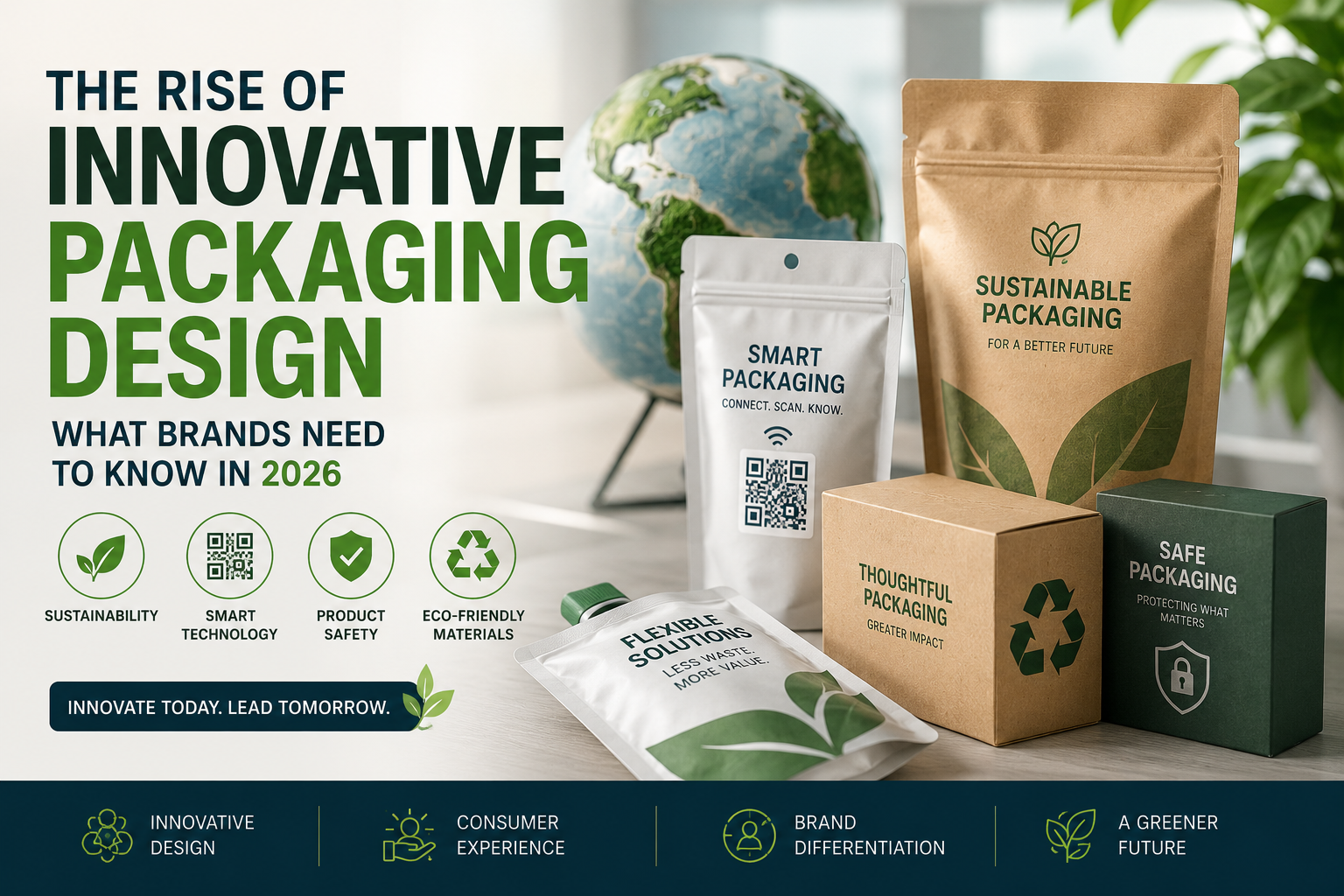
Packaging has come a long way. What used to be a box or a bag is now a brand statement, a sustainability commitment, and a communication tool, all in one. Today, innovative packaging design sits at the center of how companies build trust, reduce waste, and stay ahead of their competitors. Whether you’re a food manufacturer, a pharmaceutical company, or a consumer goods brand, how you package your product says a lot about who you are.
Over the past decade, the packaging industry has gone through a dramatic shift. Consumers now read labels more carefully, care about what materials are used, and expect packaging to do more than hold a product. For brands operating in 2026, the question is no longer whether to invest in packaging innovation; it’s how to do it right.
Why Innovative Packaging Design Is No Longer Optional
Go back 20 years, and most packaging decisions were straightforward. Pick a material, print your logo, ship it out. But today’s market looks very different. Online shopping, global supply chains, and rising consumer expectations have completely changed the rules.
Brands now compete on shelves and screens at the same time. A product sitting in a warehouse in Canada needs to survive shipping, look great on a retailer’s shelf, and still photograph well for e-commerce listings. That’s a lot to ask of packaging, and it’s exactly why Flexible Packaging has grown so quickly as a preferred format for brands across industries.
Beyond aesthetics, there’s growing pressure from regulators and consumers alike to move away from single-use plastics. Countries across Europe and North America are introducing stricter rules on packaging waste. In Pakistan and other South Asian markets, there’s a fast-growing middle class that’s becoming more environmentally aware. Brands that ignore this trend risk losing customers who actively seek out companies with greener practices.
Smart packaging design addresses all of these realities at once. It protects the product, communicates brand values, reduces environmental impact, and makes the consumer experience better from the moment they pick it up.
Smart Packaging Innovations Transforming the Industry
One of the most talked-about shifts in packaging right now is the move toward smart packaging innovations. These are packaging solutions that go beyond physical protection and start adding a layer of digital intelligence to everyday products.
Think of QR codes that let customers trace where their food was grown, or NFC tags embedded in packaging that unlock loyalty rewards when tapped with a smartphone. These aren’t futuristic concepts; they’re already being used by brands around the world, and they’re becoming more affordable as the technology matures.
There are generally two categories worth understanding here: active packaging and intelligent packaging.
Active Packaging
Active packaging interacts with the product and its environment to extend shelf life. Oxygen scavengers, moisture absorbers, and antimicrobial coatings all fall under this category. For food brands, this means less spoilage, fewer returns, and better product quality when it reaches the consumer.
A good example is modified atmosphere packaging, which replaces the air inside a package with a specific gas mixture to slow down deterioration. You’ll find this in premium meats, fresh produce, and specialty foods. Companies working with Custom Sachet Packaging often use active principles to pack small-dose products — like spice sachets or supplement powders- with built-in freshness protection.
Intelligent Packaging
Intelligent packaging collects and communicates data. RFID tags, time-temperature indicators, and digital watermarks are common tools here. For logistics and supply chain teams, this kind of packaging can track a shipment in real time and flag if a product has been exposed to temperatures outside its safe range.
For consumers, intelligent packaging builds transparency. They can scan a code and know exactly where the product came from, how it was handled, and when it expires. That kind of trust is hard to build through advertising alone, but packaging can do it instantly.
Sustainable Packaging Solutions: What the Market Wants
Sustainability is no longer a niche concern. It has become a mainstream expectation. According to multiple industry surveys, a significant portion of consumers say they’re willing to pay more for products packaged in eco-friendly materials. That number keeps rising, especially among younger buyers.
For packaging manufacturers, this creates both a challenge and an opportunity. The challenge is that eco-friendly materials historically came with performance trade-offs. Biodegradable films, for instance, sometimes struggled to match the barrier properties of conventional plastics. But recent material science advancements have changed that significantly.
Today, brands working toward genuine sustainable packaging goals have more material options than ever before. Here’s a quick look at what’s available.
Biodegradable and Compostable Films
These materials are made from plant-based sources like corn starch, sugarcane, and potato starch. They break down naturally without releasing microplastics, making them a strong choice for food brands looking to reduce their environmental footprint. Some compostable films are even certified for industrial composting, meaning they can be processed in municipal facilities.
Brands using Custom Mylar Bags are increasingly asking about compostable barrier options that maintain the same oxygen and moisture protection they rely on for products like coffee, cannabis, and dried foods.
Recyclable Flexible Barrier Materials
Traditional flexible packaging was difficult to recycle because it combined multiple material layers, often plastic, foil, and paper, that couldn’t be separated. New mono-material structures made from polyethylene (PE) or polypropylene (PP) offer similar barrier performance while being recyclable through standard streams.
This is a major development for brands committed to reducing waste without sacrificing product protection. Sustainable Packaging built on mono-material films is now a realistic option for a wide range of applications, from snack pouches to personal care products.
Minimalist Packaging Design
Sometimes the best sustainable choice is to use less. Minimalist packaging trims down layers, reduces material usage, and cuts down on the energy required for production and shipping. It also tends to look cleaner on shelves, which consumers increasingly associate with premium and responsible brands.
Popular Packaging Formats Behind Innovative Packaging Design
A key part of designing better packaging is choosing the right format. Different products need different structures, and the format itself plays a role in sustainability, shelf appeal, and consumer convenience.
Stand-Up Pouches
These are some of the most popular flexible packaging formats for a good reason. They stand upright on shelves, have a large printable surface, and can be made with resealable closures for convenience. Stand-up pouches are widely used for snacks, pet food, powders, and liquid products across retail markets worldwide.
Flat Bottom and Quad Seal Pouches
For products that need extra stability, Flat Bottom Pouches offer a wider base that keeps the package upright without support. They’re especially popular in the coffee and premium food segment. Quad Seal Pouches take this a step further with four sealed side panels, giving the package a block-like, rigid structure ideal for heavier or bulkier contents.
Stick Pack and Flow Wrap Packaging
Single-serve and on-the-go products often use slim, efficient formats. Stick Pack Packaging is a great fit for powdered supplements, sugar, salt, and other portion-controlled items. Flow Wrap Packaging, sometimes called horizontal form-fill-seal, works well for bars, baked goods, and fresh produce where speed and efficiency matter on the production line.
Lay Flat and Roll Stock
For brands that want to customize their filling process, Lay Flat Pouches offer a flexible, space-efficient option that ships flat and forms into a pouch on-site. Similarly, Roll Stock gives manufacturers the freedom to form packages in-house using their own equipment, offering significant flexibility for high-volume production.
Child-Resistant Packaging: Why It Matters More Than Ever
As cannabis legalization spreads across North America and certain pharmaceutical products become more widely distributed, the demand for Child-Resistant Packaging has grown substantially. These designs are engineered to prevent young children from accessing contents while remaining easy enough for adults to open.
Getting child-resistant packaging right isn’t just a legal requirement in many markets; it’s a brand responsibility. For companies selling anything from gummies to medications, it builds consumer confidence and protects against liability. Modern child-resistant designs have also improved significantly, moving away from the frustratingly hard-to-open formats of the past toward solutions that are user-friendly for adults while still meeting compliance standards.
How Consumer Packaging Trends Are Shaping Brand Strategy in 2026
Staying ahead of consumer packaging trends means watching what’s happening in both technology and culture. Here’s what’s shaping packaging decisions for forward-thinking brands right now.
Personalization is becoming a bigger factor. Digital printing has made it possible to produce short runs of highly customized packaging without the traditional setup costs of offset printing. Brands are using this to target specific regions, seasonal promotions, or even individual customers. This kind of personalization was once the domain of large corporations with big budgets; it’s now accessible to mid-size and smaller brands too.
Transparency is another major theme. Consumers want to know what’s in their product, where it came from, and how the packaging will be disposed of. Brands that put this information front and center, through clear labeling, QR codes, or even on-pack education about recycling, tend to earn stronger loyalty than those that stay silent.
Finally, the line between packaging and marketing is blurring. The package is often the first physical touchpoint a consumer has with a brand. It needs to do the work of an advertisement, a product guide, and a trust signal, all at once. That’s why investment in food packaging design is increasingly being treated as a marketing expense, not just an operational one.
What to Look for in a Packaging Innovation Partner
Not every packaging supplier can keep up with where the industry is heading. If you’re evaluating partners for your next project, there are a few things worth looking closely at.
First, do they have experience with the formats and materials you need? A supplier that specializes in a narrow range of structures won’t be able to grow with you as your product line expands. Look for partners who work across multiple formats and can advise on material selection based on your specific product requirements, shelf life, distribution method, retail environment, and sustainability goals.
Second, how do they handle customization? Can they scale down for short runs and up for large volume orders without major delays? Digital printing capabilities are a good sign here.
Third, ask about their sustainability credentials. Do they offer certified recyclable or compostable options? Are they transparent about the materials they use and the certifications those materials carry?
A team like Contipack Inc works with brands on all of these dimensions, from material selection to format design to production, with a focus on building packaging solutions that perform well and hold up to scrutiny from both regulators and consumers.
The Future of Innovative Packaging Design
Where does packaging go from here? The short answer: further into technology, further into sustainability, and further into the consumer experience.
Artificial intelligence is starting to play a role in packaging design, not just for generating visuals, but for optimizing structural design based on shipping data, predicting material performance, and even personalizing packaging at the point of sale. Machine learning tools can analyze consumer feedback and sales data to recommend changes that improve both the product experience and the bottom line.
IoT connectivity is making intelligent packaging even more powerful. Imagine a package that can tell a retailer when it’s about to expire, or one that adjusts its protective properties based on the temperature it’s exposed to during shipping. These aren’t distant possibilities; they’re in development and early deployment right now.
The brands that will win in this environment are the ones that treat packaging as a strategic investment rather than a cost to be minimized. That means working with partners who understand both the technical side of materials and the business side of brand building.
Final Thoughts
Innovative packaging design has moved well beyond aesthetics. In 2026, it sits at the intersection of brand strategy, sustainability, technology, and consumer psychology. Whether you’re rethinking your current packaging or starting from scratch on a new product, the decisions you make here will shape how customers see you, how your products perform, and how your brand holds up in an increasingly demanding market.
The tools are available. The materials exist. The consumer demand is real. What’s left is finding the right partner and the right approach, one that fits your product, your brand, and your goals for the years ahead.