
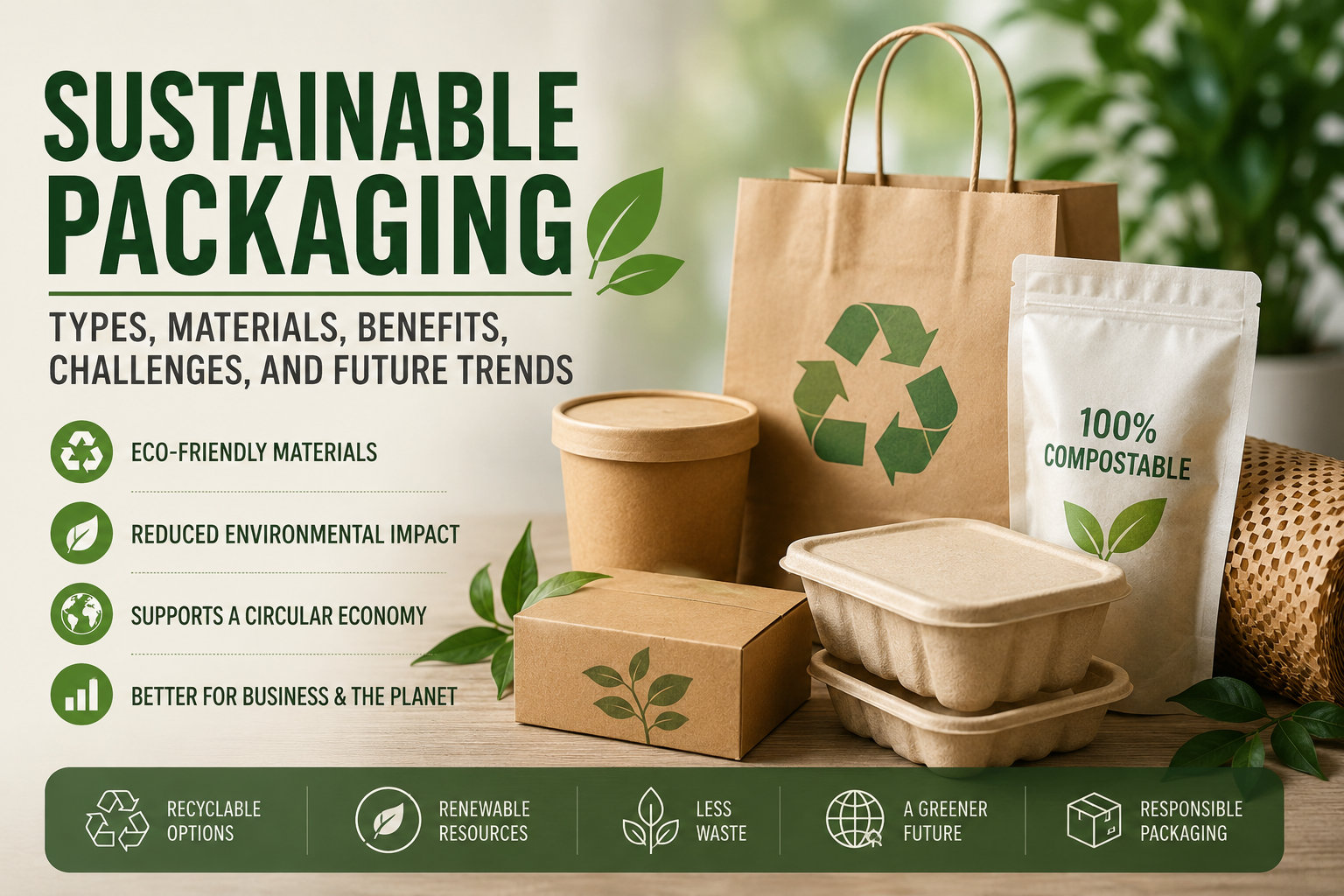
Packaging touches almost every product that moves through a supply chain, and that scale is exactly why sustainable packaging has become a board-level priority rather than a niche concern. Retailers are under pressure from regulators and consumers alike, and manufacturers such as Contipack Inc. are redesigning how goods are wrapped, boxed, and shipped. Sustainable packaging is no longer a marketing checkbox. It is a sourcing decision, a cost decision, and increasingly a compliance decision.
This guide breaks down what sustainable packaging actually means, the main types in use today, the materials behind them, the real benefits and trade-offs businesses face, and where the industry is headed. Whether you run a food brand, an e-commerce operation, or an industrial supply chain, the goal is the same: to reduce environmental impact without compromising product protection, cost efficiency, or shelf performance.
What Is Sustainable Packaging?
Sustainable packaging refers to packaging materials and designs that minimize environmental impact across their full lifecycle, from raw material sourcing and manufacturing through use, to disposal or reuse. It is not a single material or format; it is a design philosophy that weighs resource use, emissions, waste, and end-of-life outcomes together rather than optimizing for cost or convenience alone.
A simple way to evaluate packaging is to ask: what happens to the material after consumers use the product inside it?
Recyclable, compostable, reusable, or biodegradable packaging helps reduce landfill waste and conserve valuable raw materials. Packaging that cannot be recovered in any of those ways, even if it is inexpensive to produce, works against long-term sustainability goals.
Sustainable packaging solutions typically combine three things: source reduction (using less material to begin with), material selection (choosing recyclable, renewable, or compostable inputs), and end-of-life planning (making sure the packaging has a viable next life instead of becoming permanent waste).
Why Sustainable Packaging Matters?
Regulators, retailers, and consumers now pay closer attention to packaging waste because it represents one of the most visible environmental impacts associated with consumer goods. Governments around the world are introducing extended producer responsibility rules and packaging waste taxes, which means brands that ignore packaging sustainability now face direct financial exposure, not just reputational risk.
Consumers are also voting with their wallets. Shoppers increasingly compare brands on how recyclable or eco-friendly their packaging is, and retailers have started building sustainable packaging requirements directly into vendor scorecards. For B2B suppliers, including bag and film manufacturers, this means sustainability credentials are becoming a condition of doing business with larger buyers, not just a competitive edge.
Beyond compliance and brand perception, there is a straightforward resource argument. Every ton of packaging material that gets reused or recycled is a ton that does not need to be extracted, processed, and transported again. That reduces pressure on raw material supply chains and lowers the carbon footprint associated with production.
Key Principles of Sustainable Packaging
Sustainable packaging design is generally guided by a small set of principles that apply across industries:
- Reduce: use the minimum amount of material needed to protect the product.
- Reuse: design packaging that can go through multiple use cycles before disposal.
- Recycle: choose materials that existing recycling infrastructure can actually process.
- Renew: favor renewable or recycled-content raw materials over virgin fossil-based inputs.
- Rethink: question whether a package format is needed at all, or whether it can be simplified.
These principles map closely to circular economy thinking, where materials are designed to stay in productive use for as long as possible instead of following a linear take-make-dispose path. Businesses that apply these principles consistently tend to see both lower material costs and stronger sustainability positioning over time.
Types of Sustainable Packaging
Sustainable packaging is not one format; it spans several distinct approaches, each suited to different products, industries, and disposal infrastructure. Most businesses end up using a mix rather than a single type.
1. Recyclable Packaging
Recyclable packaging is designed to be collected, processed, and remanufactured into new material after use. This is the most widely adopted form of sustainable packaging because recycling infrastructure already exists in most regions for materials like paper, cardboard, and several plastic resins. Recyclable mono-material formats such as Flat Bottom Pouches fall into this category when produced with recyclability in mind, alongside woven polypropylene and BOPP-based packaging, making them practical choices for businesses that need durability alongside a clear end-of-life path.
The catch with recyclable packaging is that recyclability on paper does not always match recyclability in practice; contamination, mixed-material construction, and inconsistent municipal collection all reduce real-world recycling rates. Effective recyclable packaging design keeps material composition simple and clearly labeled.
2. Compostable Packaging
Compostable packaging breaks down into water, carbon dioxide, and biomass under specific composting conditions, typically within an industrial composting facility rather than a home compost bin. It is well suited to food-contact applications where recycling is impractical due to contamination, such as food wrappers, produce bags, and coffee packaging.
Certification matters here; a package labeled compostable should carry a recognized standard (such as ASTM D6400 or EN 13432) confirming it breaks down within a defined timeframe without leaving toxic residue. Without access to industrial composting infrastructure, compostable packaging can end up in landfill anyway, where it behaves differently than in a composting environment.
3. Biodegradable Packaging
Biodegradable packaging breaks down naturally through the action of microorganisms, but unlike compostable packaging, the term does not guarantee a specific timeframe or the absence of harmful residues unless backed by a certification standard. This makes biodegradable packaging a broader, less precisely defined category than compostable packaging.
Businesses evaluating biodegradable packaging materials should look past the label and check for third-party verification of breakdown time and environmental safety, since the term alone can be applied loosely in marketing.
4. Reusable Packaging
Reusable packaging is designed for multiple trips through a supply chain, think of returnable transit containers, refillable containers, and durable outer packaging like heavy-duty stretch film pallets and vented stretch film wraps used in repeated shipping cycles. Because reusable packaging avoids the need for constant remanufacturing, it often delivers the strongest lifecycle environmental benefit of any category, provided the logistics of collection and return are manageable.
For industrial and B2B shippers, reusable packaging tends to pay for itself over several cycles even when the upfront cost is higher than single-use alternatives, making it a strong fit within broader industrial packaging solutions moving between fixed origin and destination points.
Common Sustainable Packaging Materials
Material choice is where sustainable packaging design becomes concrete. The most common sustainable packaging materials in use today include:
- Recycled paper and cardboard: widely recyclable, biodegradable, and increasingly made with high recycled content.
- Recyclable woven polypropylene (PP): durable, lightweight, and used heavily in bulk and industrial packaging such as feed bags.
- BOPP (biaxially oriented polypropylene) film: used for printed, moisture-resistant packaging with recyclable resin bases.
- PLA (polylactic acid) and other bioplastics: plant-based alternatives to petroleum plastics, often compostable under industrial conditions.
- Molded fiber and pulp: used for cushioning and food service ware, fully compostable and biodegradable.
- Recycled-content stretch film: reduces virgin plastic use in palletizing and freight wrapping while maintaining load stability.
Flexible, single-serve formats such as Stick Pack packaging increasingly rely on these same recyclable and bio-based material bases, particularly for nutraceuticals and personal care products.
Material selection is rarely about picking the single greenest option in isolation; it is about matching a material’s durability, cost, and recyclability profile to the actual product and shipping conditions. A woven polypropylene feed bag and a compostable food pouch are solving very different problems, even though both fall under the sustainable packaging umbrella.
Benefits of Sustainable Packaging
The case for sustainable packaging extends well beyond environmental goodwill:
- Lower long-term material costs through source reduction and reuse.
- Reduced regulatory and tax exposure as packaging waste rules tighten globally.
- Stronger brand trust with consumers who actively check packaging claims.
- Improved retailer and distributor relationships as more buyers require sustainability compliance.
- Smaller carbon footprint across sourcing, production, and disposal.
- Better alignment with green supply chain and ESG reporting requirements.
For many businesses, the clearest sustainable packaging benefit is risk reduction: locking in materials and formats that will remain compliant as regulations evolve, rather than repeatedly re-engineering packaging every time a new waste rule takes effect.
There is also an operational benefit that often gets overlooked: sustainable packaging redesigns frequently force a broader review of box dimensions, fill rates, and pallet configuration, which tends to reduce freight costs and warehouse space needs alongside the environmental gains. A lighter, right-sized package costs less to ship and store, independent of whatever material it is made from, so the Sustainable packaging project often pays for itself twice over.
Challenges of Sustainable Packaging
Sustainable packaging is not without friction, and businesses evaluating a switch should go in with clear eyes on the trade-offs:
- Higher upfront costs for certified compostable or bio-based materials compared to conventional plastics.
- Inconsistent recycling and composting infrastructure across regions and municipalities.
- Performance trade-offs, since some sustainable materials offer less moisture or puncture resistance than conventional options.
- Greenwashing risk, where vague claims like biodegradable are used without certification or evidence.
- Supply chain complexity when sourcing certified sustainable materials at scale.
- Consumer confusion over what can actually be recycled or composted in their local area.
Businesses that successfully navigate these challenges tend to treat sustainable packaging as a phased transition rather than a single overhaul, starting with the highest-impact, lowest-disruption changes first, such as switching to recycled-content film or right-sizing box dimensions, before moving into more complex material substitutions.
It also helps to separate marketing claims from engineering reality early in the process. A packaging supplier that can provide test data, certification numbers, and recycling stream compatibility is a far safer partner than one offering only broad sustainability language, since the latter tends to create compliance exposure down the line rather than removing it.
Sustainable Packaging vs Traditional Packaging
Traditional packaging is typically optimized for cost and performance alone, using virgin plastics, mixed-material laminates, and minimal end-of-life consideration. Sustainable packaging optimizes for the same performance requirements while also weighing material sourcing, recyclability, and disposal outcomes.
The practical differences show up in a few key areas. Traditional packaging often uses composite materials that are cheap to produce but difficult or impossible to recycle, since separating layers of plastic, foil, and paper is not economical at most recycling facilities. Sustainable packaging designs tend to favor mono-material construction specifically so the package can move through existing recycling streams.
Cost comparisons are not always straightforward either. Traditional packaging can appear cheaper on a per-unit basis, but sustainable packaging often reduces total cost of ownership through lighter-weight designs, reusability, and avoided disposal or regulatory fees, meaning the comparison should be made on a lifecycle basis rather than sticker price alone.
Performance is the other side of the comparison. Traditional packaging has decades of engineering behind it for barrier properties, load strength, and shelf stability, so sustainable alternatives have to be tested against the same real-world conditions rather than assumed to be a drop-in replacement. In most cases, the gap has narrowed significantly. Recyclable woven polypropylene and BOPP films now match or exceed the strength and moisture resistance of many conventional plastics, which is why they have become standard rather than niche choices for bulk and industrial packaging.
Sustainable Packaging Applications Across Industries
Sustainable packaging varies significantly across industries. In the food and beverage sector, compostable and recyclable materials are widely used because packaging often comes into direct contact with products and is frequently single-use. E-commerce businesses have increasingly adopted right-sized recyclable boxes and paper-based cushioning instead of plastic void fill. Meanwhile, the agriculture and animal feed industry continues to rely on durable recyclable bags, including animal feed bags, poultry feed bags, livestock feed bags, and fish feed bags, as these packages must withstand moisture, rough handling, and extended storage periods. Reusable containers and recycled-content films are becoming more common in industrial and logistics operations, where materials often move through multiple shipping cycles before entering recycling streams. Although the packaging formats differ, the objective remains the same: balancing product protection and shelf life with responsible end-of-life disposal.
Flexible packaging has also become one of the fastest-growing sustainable formats because it uses far less material per unit than rigid alternatives.
Single-serve formats like Custom Sachet Packaging cut material use even further, replacing bulky multi-layer rigid packs with thin, high-barrier film for products like nutraceuticals, personal care items, and single-serve foods.
Custom Mylar Bags offer strong moisture and light barrier protection for products that need extended shelf-stable storage, making them a common choice across food, supplement, and industrial categories.
Flow Wrap Packaging is widely used for snack and bakery items, where speed and a minimal material footprint both matter on high-volume production lines.
For regulated products such as supplements and cannabis, Child-Resistant Packaging designs now meet safety compliance requirements without giving up recyclable material choices.
Future Trends in Sustainable Packaging
Several trends are shaping where sustainable packaging is headed over the next several years:
- Higher recycled-content mandates, with more regions requiring a minimum percentage of post-consumer recycled material in plastic packaging.
- Growth in mono-material flexible packaging designed specifically for existing recycling streams.
- Expansion of reusable packaging systems for both e-commerce and B2B logistics.
- Digital tracking (QR codes and smart labels) that tells consumers exactly how to recycle or compost specific packaging.
- Continued development of bio-based films and coatings that reduce reliance on virgin plastics without sacrificing barrier performance.
- Tighter regulation around biodegradable and compostable claims to reduce greenwashing.
The overall direction is toward packaging that is simpler to recycle, backed by verified claims rather than marketing language, and increasingly built around reuse rather than single-use disposal. Suppliers that already build recyclability into their core product lines, rather than retrofitting it later, are best positioned as these requirements tighten, since reformulating an established bag or film construction under regulatory pressure is far more disruptive than designing it in from the start.
How Businesses Can Adopt Sustainable Packaging?
Moving toward sustainable packaging does not require replacing an entire packaging line overnight. A practical adoption path looks like this:
- Audit current packaging materials and identify the highest-volume, highest-impact formats first.
- Right-size packaging to eliminate unnecessary material before switching materials entirely.
- Prioritize recyclable BOPP and woven polypropylene film where durability is a requirement, alongside recycled-content film for palletizing.
- Introduce compostable or biodegradable formats for direct food-contact or single-use applications, backed by certification.
- Evaluate reusable packaging for closed-loop or repeat shipping routes.
- Work with a packaging supplier that can provide verified material specifications rather than relying on generic sustainability claims.
Businesses that source industrial or flexible packaging can simplify material transitions by partnering with suppliers that produce recyclable and durable packaging at scale across both flexible and rigid product lines.
FAQs
What is sustainable packaging?
Sustainable packaging is packaging designed to minimize environmental impact across its full lifecycle, using recyclable, compostable, biodegradable, or reusable materials instead of single-use, hard-to-recover formats.
What are the main types of sustainable packaging?
The main types are recyclable packaging, compostable packaging, biodegradable packaging, and reusable packaging, each suited to different products and disposal infrastructure.
What materials are used in sustainable packaging?
Common materials include recycled paper and cardboard, recyclable woven polypropylene, BOPP film, PLA and other bioplastics, molded fiber, and recycled-content stretch film.
Is sustainable packaging more expensive than traditional packaging?
Upfront costs can be higher for certified compostable or bio-based materials, but sustainable packaging often lowers total cost over time through reuse, lighter-weight designs, and reduced regulatory or disposal fees.
How can a business start switching to sustainable packaging?
Start by auditing current packaging to find the highest-impact formats, right-size material use, then shift toward recyclable or reusable formats for the largest-volume packaging first.