
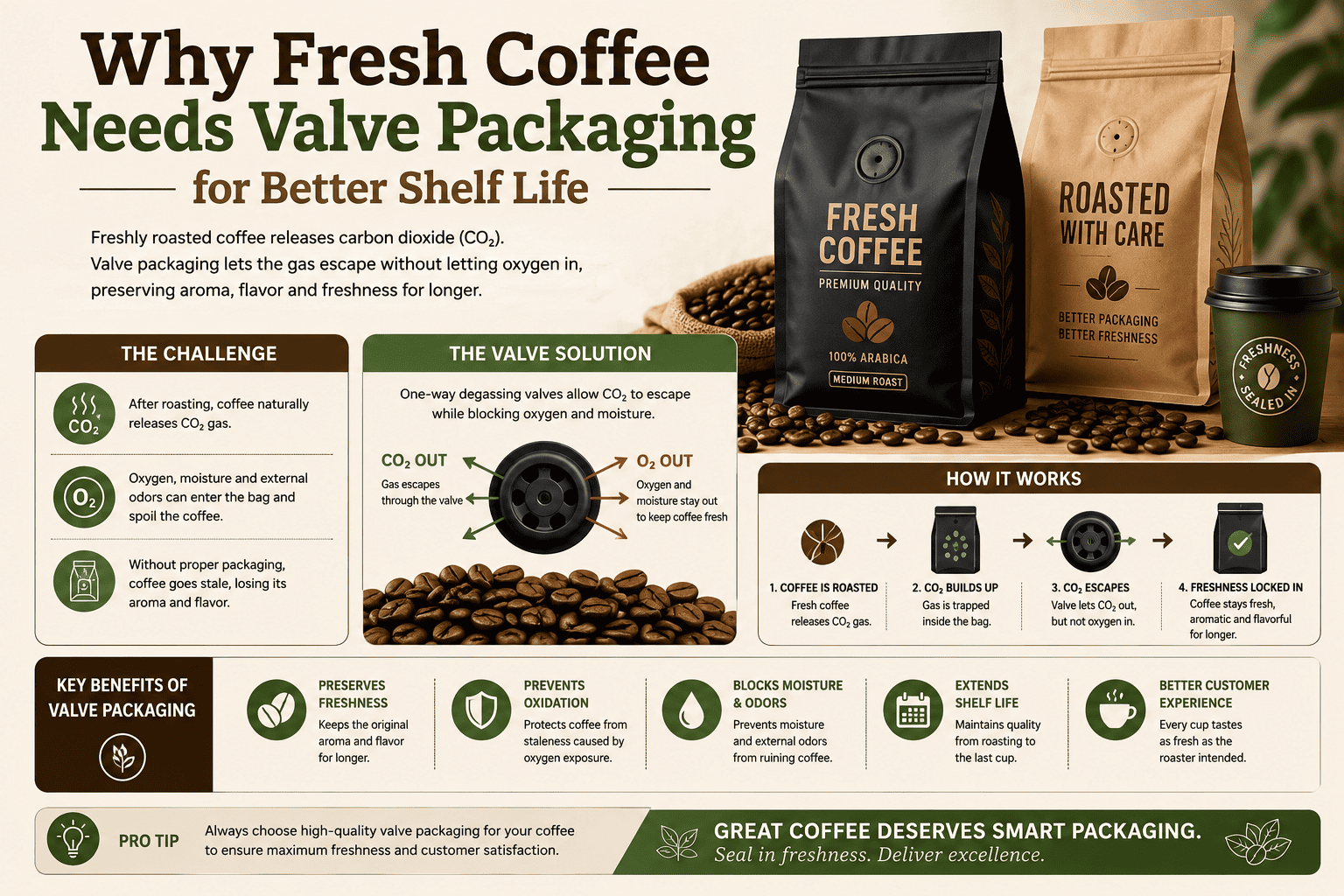
Freshly roasted coffee even after it leaves the roaster, the beans continue to release carbon dioxide for days or even weeks. While this natural process is a sign of freshness, it also creates a packaging challenge. If the gas has nowhere to escape, pressure builds inside the package, potentially causing the bag to swell, distort, or even burst during storage and transportation. This is why many premium coffee packages include a small but essential feature known as a coffee valve.
If you’ve ever wondered why do coffee bags have vents, the answer lies in preserving freshness while protecting the product. These one-way valves allow carbon dioxide to escape without letting oxygen enter the bag. The result is longer shelf life, better aroma retention, and improved product quality from the roaster to the consumer.
For packaging buyers, understanding how a coffee bag valve works is just as important as selecting the right pouch style or barrier material. Whether you’re packaging whole beans or creating ground coffee packaging, the valve plays a significant role in maintaining product integrity throughout the supply chain.
What Is A Coffee Valve?
A coffee valve, often called a degassing valve, is a one-way vent attached to flexible coffee packaging. It is designed to release carbon dioxide generated by freshly roasted coffee while preventing outside air from entering the package.
Unlike a simple opening, the valve only works in one direction. As gas pressure increases inside the pouch, the valve opens briefly to release excess carbon dioxide. Once the pressure returns to normal, it seals itself again, blocking oxygen, moisture, and contaminants from entering the bag.
This simple mechanism helps coffee brands maintain freshness without sacrificing product safety. Today, valve coffee bags have become the industry standard for premium roasted coffee sold in retail stores and online.
Why Do Coffee Bags Have Vents?
The main reason coffee bags have vents is to manage the natural degassing process that occurs after roasting.
During roasting, coffee beans undergo chemical reactions that produce significant amounts of carbon dioxide. Although much of this gas escapes immediately after roasting, the beans continue releasing smaller amounts for several days afterward.
If freshly roasted beans were sealed inside an airtight package without a vent, pressure would gradually build inside the bag. This can lead to bloated packaging, damaged seals, transportation issues, and reduced shelf appeal.
At the same time, simply leaving the package open is not an option. Oxygen is one of coffee’s biggest enemies. Exposure to air accelerates oxidation, causing coffee to lose its aroma, flavor, and freshness much more quickly.
This explains why do coffee bags have a valve instead of simple ventilation holes. A one-way valve solves both problems by allowing carbon dioxide to escape while preventing oxygen from entering the package.
How Does A Coffee Bag Valve Work?
A coffee bag valve responds automatically to pressure changes inside the package.
As freshly roasted coffee releases carbon dioxide, pressure gradually increases within the sealed pouch. Once the internal pressure reaches a certain level, the valve opens momentarily to release the excess gas. After the pressure drops, the valve closes again, maintaining the protective environment inside the package.
Because oxygen cannot travel back through the valve, the coffee remains protected from oxidation while continuing its natural degassing process.
This small component works continuously throughout storage, transportation, warehousing, and retail display without requiring any action from the manufacturer or consumer.
Why Carbon Dioxide Matters?
Many consumers assume carbon dioxide is harmful to coffee, but the opposite is true.
Freshly roasted beans naturally contain large amounts of trapped carbon dioxide. In fact, the presence of this gas is one indicator that the coffee has been roasted recently.
The challenge is not eliminating carbon dioxide but managing it correctly.
Without proper release, excessive gas pressure can:
- Distort packaging
- Stress heat seals
- Reduce shelf presentation
- Increase the risk of package failure during shipping
A properly designed coffee valve allows brands to package coffee sooner after roasting while maintaining product quality throughout distribution.
Why Valve Coffee Bags Are Preferred For Premium Coffee
Most specialty coffee brands choose valve coffee bags because they provide a balance between freshness protection and operational efficiency.
Instead of waiting several days for coffee to finish releasing carbon dioxide before packaging, manufacturers can pack their products much sooner. This helps reduce production delays while ensuring consumers receive fresher coffee.
For businesses shipping products over long distances or storing inventory for extended periods, valve-equipped packaging also minimizes the risk of swollen or damaged packages reaching retailers.
When combined with high-barrier flexible packaging, the valve helps preserve aroma, flavor, and overall product quality from production to purchase.
Are Valves Necessary For Ground Coffee Packaging?
Not every coffee product requires a degassing valve.
The need depends largely on how the coffee is processed, packaged, and distributed.
Freshly roasted whole beans produce the highest levels of carbon dioxide after roasting, making valves highly beneficial. Many premium ground coffee packaging solutions also include valves because freshly ground coffee continues releasing gas, although generally at a different rate than whole beans.
However, products packed after an extended resting period or processed under different manufacturing conditions may not always require a valve.
Packaging buyers should evaluate roasting schedules, filling operations, expected shelf life, and distribution channels before deciding whether to use valve-equipped packaging or standard sealed pouches
Degassing Valve Coffee Bags: Why They Matter
Not all coffee bags are designed the same way. While standard pouches provide protection against moisture, light, and oxygen, degassing valve coffee bags add another layer of functionality by addressing the natural release of carbon dioxide after roasting.
A degassing valve works alongside the high-barrier structure of the pouch rather than replacing it. The packaging material keeps external elements such as oxygen and humidity out, while the valve manages the internal pressure created by freshly roasted coffee. Together, these features help preserve aroma, maintain flavor consistency, and protect the structural integrity of the package.
For packaging buyers, this combination offers practical benefits beyond product freshness. It reduces the likelihood of swollen bags during transportation, minimizes stress on package seals, and helps products arrive on retail shelves in excellent condition. As a result, degassing valve coffee bags have become a preferred solution for specialty coffee brands and commercial roasters alike.
Choosing The Right Packaging For Whole Bean & Ground Coffee
Although whole bean and ground coffee come from the same source, their packaging requirements can differ based on roasting schedules, filling operations, and expected shelf life.
Whole bean coffee typically continues releasing carbon dioxide for a longer period after roasting. Because of this, many brands package whole beans in pouches equipped with a one-way valve. The valve allows excess gas to escape while maintaining a protective barrier against oxygen, helping preserve the beans’ aroma and flavor.
A ground coffee bag may also benefit from a valve, particularly when the coffee is packaged soon after grinding. Since grinding increases the coffee’s surface area, it becomes more susceptible to oxidation. Maintaining an oxygen-resistant environment inside the package becomes even more important for protecting flavor and extending shelf life.
Packaging buyers should evaluate their production timeline, distribution channels, and freshness goals before deciding whether a valve is necessary. Working closely with a packaging supplier ensures the selected solution aligns with both operational requirements and product performance.
Which Coffee Pouch Styles Support Valves?
One-way valves can be integrated into several flexible packaging formats. The best choice depends on your product positioning, storage requirements, and retail strategy.
Stand-up pouches remain one of the most popular options because they combine excellent shelf presence with efficient use of storage space. Their front-facing design offers ample room for branding while accommodating a degassing valve without compromising package performance.
Flat bottom pouches are widely used for premium coffee because of their exceptional stability and larger printable surface. Their box-like structure provides a premium appearance while supporting heavier fills and maintaining an organized retail display.
Quad seal pouches are another preferred format for wholesale, commercial, and larger-volume coffee packaging. Their reinforced side seals improve structural strength, making them well suited for products that travel through extended distribution networks.
Selecting the appropriate pouch style should never focus on appearance alone. The packaging format should complement the product’s weight, distribution requirements, branding goals, and freshness expectations.
Common Misconceptions About Coffee Bag Valves
One of the most common misconceptions is that the vent allows outside air to enter the package. In reality, a coffee valve is designed as a one-way mechanism. It releases internal carbon dioxide while preventing oxygen from moving back into the pouch.
Another misunderstanding is that every coffee product requires a valve. While many freshly roasted whole bean products benefit from valve-equipped packaging, the decision depends on factors such as roasting schedule, packaging timeline, product type, and intended shelf life. Some applications may achieve their performance goals without incorporating a valve.
Some consumers also believe a swollen coffee bag indicates poor packaging quality. In many cases, slight expansion simply reflects the natural degassing process of freshly roasted coffee. A functioning valve helps regulate this pressure, allowing the package to maintain its shape while preserving product freshness.
Understanding these distinctions helps packaging buyers make informed decisions rather than relying on assumptions or industry myths.
How Packaging Buyers Should Choose Coffee Bags With Valves
Selecting the right coffee packaging involves much more than deciding whether to include a valve. Buyers should evaluate the complete packaging system, ensuring every component works together to protect the product throughout its lifecycle.
High-barrier materials remain essential for minimizing oxygen and moisture transmission, while the valve manages internal gas release. The pouch style should align with the product’s positioning and retail environment, and sealing performance must support transportation and long-term storage. Printing quality, finish options, and sustainability objectives should also be considered during the selection process.
By assessing these factors together rather than individually, brands can develop packaging solutions that preserve coffee quality while reinforcing their market presence.
Frequently Asked Questions
1. Do all coffee bags have vents?
No. While many premium coffee products use one-way valves, not every coffee package requires one. The decision depends on the roasting process, packaging schedule, and desired shelf life.
2. What is the purpose of a coffee valve?
A coffee valve allows carbon dioxide released by freshly roasted coffee to escape while preventing oxygen from entering the package. This helps maintain freshness and reduce pressure inside the bag.
3. Are valve coffee bags only for whole bean coffee?
No. Valve coffee bags are commonly used for whole bean coffee, but they can also be suitable for freshly packed ground coffee depending on production and distribution requirements.
4. Can consumers smell coffee through the valve?
No. The valve is engineered to regulate internal gas pressure rather than act as an opening. It remains sealed against outside air under normal conditions.
5. Does a coffee valve replace high-barrier packaging?
No. The valve complements the packaging but does not replace barrier materials. Both features work together to protect coffee from oxygen, moisture, and environmental exposure.
Conclusion
A coffee bag valve may appear to be a small feature, but its impact on product quality is significant. By allowing freshly roasted coffee to release carbon dioxide while preventing oxygen from entering the package, the valve helps preserve aroma, flavor, and freshness throughout storage, transportation, and retail display.
For packaging buyers, understanding why coffee bags have vents is an important step toward selecting packaging that performs reliably across the supply chain. Whether you’re packaging whole beans or developing a premium ground coffee packaging solution, combining the right pouch style with a high-performance degassing valve can improve both product protection and customer satisfaction.
If you’re exploring custom coffee packaging, consider pairing valve technology with high-barrier stand-up pouches, flat bottom pouches, or quad seal pouches based on your product requirements. Choosing the right combination of structure, barrier properties, and functional features ensures your coffee reaches consumers as fresh as the day it was roasted