
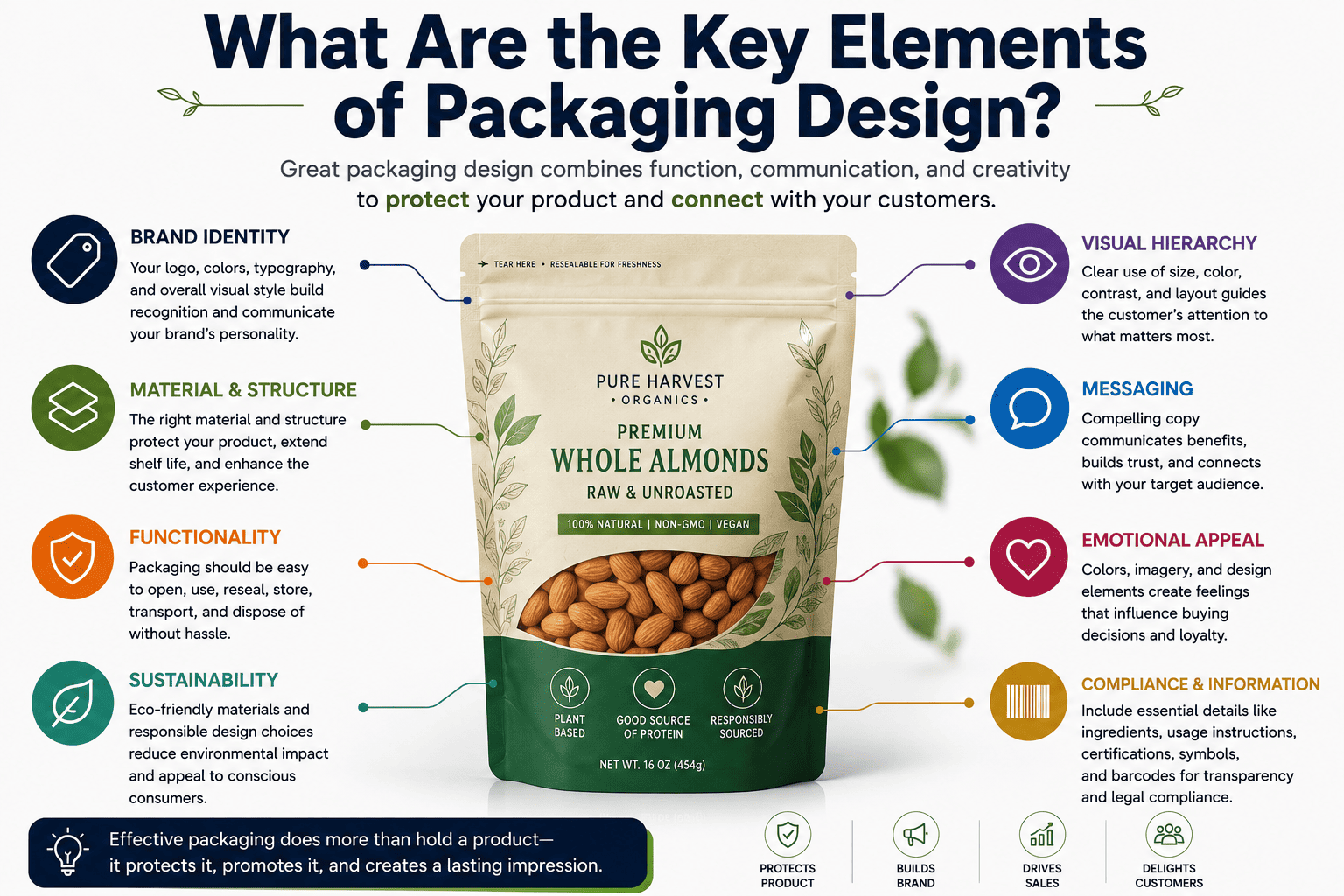
Packaging design is more than creating an attractive package. It combines branding, material selection, functionality, and product protection to ensure a package performs throughout its lifecycle. A well-designed package captures attention on the shelf, communicates important product information, and protects its contents during storage, transportation, and handling. For businesses, effective packaging design also improves operational efficiency and strengthens brand recognition. Understanding the key elements of packaging design helps companies create packaging that not only looks appealing but also meets consumer expectations and supports long-term business growth.
Why Packaging Design Matters?
Packaging is often the first interaction consumers have with a product. Before reading product details or experiencing what’s inside, customers form opinions based on the packaging’s appearance, quality, and usability. An effective packaging design communicates brand value, differentiates products from competitors, and builds consumer trust.
However, successful packaging extends far beyond aesthetics. It must protect products throughout manufacturing, transportation, storage, and retail display. The right packaging also improves filling efficiency, reduces product waste, and enhances convenience for consumers after purchase. When these elements work together, packaging becomes an essential part of the overall product experience rather than simply a protective container.
For manufacturers, investing in thoughtful packaging design can reduce operational challenges while strengthening product presentation. For consumers, it creates confidence that the product inside is fresh, safe, and worth purchasing.
Brand Identity Creates A Lasting First Impression
One of the most important elements of packaging design is brand identity. Every package should immediately communicate who the brand is and what it stands for. Consistent use of logos, typography, colors, imagery, and messaging helps consumers recognize products quickly and builds familiarity over time.
Different industries approach branding in different ways. Food and beverage, for example, often emphasizes premium quality, and origin through bright color palettes, minimalist layouts, and matte finishes. Specialty snack brands frequently use storytelling to highlight bean origin, roasting methods, or sustainability initiatives, creating an emotional connection with consumers before the package is even opened.
Regardless of the industry, successful packaging design ensures every visual element works together to create a memorable brand experience while communicating the product’s purpose within seconds.
Material Selection Determines Packaging Performance
Material selection is one of the most critical decisions in the packaging design process because it directly affects product protection, durability, print quality, and sustainability. Choosing the right material involves understanding how the product behaves throughout its lifecycle rather than simply selecting a material that looks attractive.
For coffee packaging, high-barrier materials are essential to protect roasted beans or ground coffee from oxygen, moisture, and light. Many manufacturers combine kraft paper with multilayer barrier films to achieve a natural appearance while preserving freshness and aroma. Depending on the product, additional features such as degassing valves and resealable zippers may also be incorporated to enhance performance and convenience.
If you are interested to know more about coffee packaging checkout our blog “Complete guide to coffee packaging material”
Chip bags packaging requires materials capable of maintaining crispness while withstanding handling and transportation. High-barrier laminate structures help retain nitrogen inside the package, preventing oxidation and preserving flavor. Strong seal integrity and puncture resistance are equally important because even minor damage can affect product quality before it reaches consumers.
If you are interested to know more about chip bag packaging checkout our blog “Type Of Chips Packaging Guide For Brands”
For cookie packaging, moisture control is a primary consideration. Packaging materials must prevent humidity from softening the product while providing sufficient strength to reduce breakage during distribution. Flexible laminates with excellent sealing properties help maintain freshness while supporting attractive retail presentation.
Other snacks such as granola packaging also benefit from barrier packaging because ingredients like oats, nuts, and dried fruits are sensitive to oxygen and moisture. Packaging materials should preserve texture and flavor while supporting premium graphics that reflect the product’s healthy positioning.
Similarly, gummy packaging requires materials that protect against moisture migration and temperature fluctuations. Gummies can lose texture or become sticky when exposed to unsuitable storage conditions, making high-quality barrier films essential. Resealable packaging also improves convenience by allowing consumers to maintain product freshness after opening.
Selecting the right material is therefore not about choosing the thickest or most expensive option. Instead, it involves balancing product protection, sustainability, printability, production efficiency, and overall customer experience.
Structural Design Balances Presentation & Functionality
The physical structure of a package influences far more than its appearance. It determines how efficiently products move through production, how they perform during transportation, how they stand out on shelf and how consumers interact with them after purchase.
Flexible packaging offers a wide range of structural options, each designed to meet different product requirements. Stand-up pouches are widely used for granola, gummies, trail mix, protein snacks, and confectionery because they combine excellent shelf presence with lightweight construction and resealable convenience. Their upright design maximizes branding space while helping products remain organized on retail shelves.
For premium products such as specialty coffee, gourmet snacks, and artisan foods, flat bottom pouches provide exceptional stability and a premium appearance. Their box-shaped structure increases shelf visibility while offering additional printable surfaces for branding and product information. The design also improves filling efficiency, making it a popular choice for higher-value packaged goods.
When packaging heavier products or larger volumes, quad seal pouches offer enhanced structural strength. Their reinforced side seals distribute weight evenly, making them suitable for bulk coffee, grains, granola, and other products that require greater durability throughout storage and transportation. In addition to improving package strength, quad seal pouches deliver a premium retail appearance that appeals to both brands and consumers.
Graphics & Visual Hierarchy Help Products Stand Out
An attractive package can capture attention, but an effective package also guides consumers to the information that matters most. This is where visual hierarchy plays a critical role. It determines how customers read the package by organizing logos, product names, images, colors, and supporting information in a logical order.
The product name should immediately catch the consumer’s eye, followed by the product’s key benefit or flavor. Secondary information, such as ingredients, certifications, or preparation instructions, should be easy to locate without overwhelming the overall design. Clean typography and sufficient white space improve readability, while consistent branding helps consumers recognize products quickly across multiple product lines.
Visual design also varies depending on the product category. Coffee often required minimalist layouts, earthy tones, and premium finishes packaging to communicate and quality. In contrast, chip bags packaging typically uses bold colors, large product images, and vibrant graphics that create excitement and encourage impulse purchases.
For gummy and granola packaging, bright colors and playful illustrations help communicate flavor and attract a younger audience. Understanding these visual differences allows brands to create packaging that resonates with their target market while maintaining a strong brand identity.
Printing Technology Brings Packaging Designs To Life
Even the best packaging design depends on high-quality printing to achieve its intended impact. Printing technology affects color consistency, image clarity, production speed, and overall packaging cost, making it an important part of the design process.
Digital printing pouches has become increasingly popular for short production runs, product launches, and seasonal packaging because it allows brands to update designs without investing in new printing plates. This flexibility is especially valuable for companies testing new flavors, limited-edition products, or promotional campaigns.
Flexographic printing remains one of the most widely used methods for flexible packaging because it delivers consistent quality across medium and large production volumes. It supports a wide range of packaging materials and provides an excellent balance between efficiency, quality, and cost.
Choosing the appropriate printing process depends on production volume, artwork complexity, turnaround time, and budget. Working closely with an experienced packaging manufacturer like ContipackInc ensures the selected printing method aligns with both design expectations and production requirements.
Product Protection Should Never Be Compromised
A package may have outstanding graphics and strong branding, but if it cannot protect the product inside, the design has failed. Product protection is one of the most important elements of packaging design because it directly affects product quality, shelf life, and customer satisfaction.
Different products require different levels of protection. Coffee and Tea must preserve aroma and freshness by preventing oxygen, moisture, and light from reaching the roasted beans or ground coffee. High-barrier laminates, airtight seals, and degassing valves are commonly incorporated into the packaging structure to maintain product quality.
Chips presents another unique challenge. Chips are fragile and highly susceptible to moisture, making puncture-resistant materials and secure seals essential. Packaging also needs to work effectively with nitrogen flushing to help maintain crispness throughout distribution.
For cookie packaging, product protection extends beyond moisture control. The package must also minimize breakage during transportation while keeping cookies fresh after opening. Flexible packaging with resealable closures can improve convenience while extending shelf life.
These examples demonstrate why packaging design cannot rely on appearance alone. Material selection, barrier performance, and package construction must work together to ensure products reach consumers in the best possible condition.
Sustainable Packaging Design Is Reshaping The Industry
Sustainability has become a key consideration in modern packaging design as brands seek solutions that reduce environmental impact without sacrificing product performance. Consumers increasingly expect packaging that uses fewer resources, incorporates recyclable materials, and supports responsible manufacturing practices.
Flexible packaging manufacturers are responding by developing recyclable mono-material structures, lightweight films, and packaging that reduces material consumption while maintaining barrier performance. These innovations help businesses lower transportation costs and decrease overall packaging waste.
The most successful sustainable packaging solutions balance environmental responsibility with durability, functionality, and consumer convenience, ensuring the package performs effectively throughout its lifecycle.
Packaging Design Considerations For Different Products
Every product has unique packaging requirements, which is why there is no universal packaging design solution. Understanding the product’s characteristics helps businesses choose materials, structures, and graphics that deliver the best results.
For Food packaging preserving aroma and freshness is the highest priority. Packaging often includes high-barrier materials, resealable zippers, and degassing valves while using premium branding to communicate quality and origin.
By tailoring packaging design to the specific needs of each product category, brands can create packaging that enhances both product performance and consumer experience.
Common Packaging Design Mistakes To Avoid
Even the most attractive packaging can fail if it overlooks functionality or the needs of the end user. One of the most common mistakes is prioritizing appearance over performance. A package may look impressive on the shelf, but if it cannot protect the product from moisture, oxygen, or physical damage, it will ultimately lead to poor customer experiences and increased product waste.
Another frequent mistake is selecting materials without considering the product’s specific requirements.
Many brands also underestimate the importance of package structure. Choosing the wrong format can affect filling efficiency, shipping costs, and retail presentation. A premium coffee product may benefit from a flat bottom pouch, while cookies and chips often perform better in a resealable pouch that offers convenience and strong shelf presence. For heavier products, a quad seal pouch provides additional stability and durability without sacrificing branding opportunities.
Visual communication is another area where mistakes commonly occur. Overcrowding the package with excessive graphics or too much text can make important product information difficult to find. Clear typography, logical information hierarchy, and consistent branding help consumers quickly understand what the product offers while strengthening brand recognition.
Finally, overlooking sustainability can limit a package’s long-term success. Consumers increasingly value packaging that minimizes material usage and supports recycling initiatives. Considering sustainability during the design stage allows brands to reduce environmental impact while meeting evolving market expectations.
Frequently Asked Questions
1. What are the key elements of packaging design?
The key elements of packaging design include brand identity, material selection, structural design, graphics, printing quality, product protection, sustainability, regulatory compliance, and user experience. Together, these elements create packaging that protects products while supporting branding and consumer convenience.
2. Why is packaging design important?
Packaging design influences purchasing decisions, protects products during transportation and storage, improves shelf visibility, and strengthens brand recognition. Effective packaging also enhances operational efficiency and contributes to a positive customer experience.
3. How do you choose the right packaging material?
The right packaging material depends on the product’s barrier requirements, shelf-life goals, transportation conditions, printing needs, and sustainability objectives. Products such as coffee, chips, cookies, granola, and gummies each require different material structures to maintain freshness and product quality.
4. What is the best packaging format for food products?
There is no single packaging format that suits every product. Stand-up pouches are commonly used for granola, snacks, and gummies because they combine shelf appeal with convenience. Flat bottom pouches are ideal for premium products like coffee, while quad seal pouches provide additional strength for heavier food products and bulk packaging.
5. How does flexible packaging improve packaging design?
Flexible packaging allows brands to combine lightweight materials, high-barrier protection, premium printing, and convenient features such as resealable closures. It also offers greater design flexibility and can help reduce transportation costs and material consumption compared to many rigid packaging alternatives.
Conclusion
Successful packaging design is built on much more than attractive graphics. It requires a thoughtful combination of branding, structural engineering, material science, printing technology, and product protection to create packaging that performs throughout the supply chain while delivering an exceptional customer experience.
Whether you’re developing packaging for the food industry or any other market place , every product has unique requirements that influence material selection, package structure, and overall design. By understanding these key elements, businesses can create packaging that protects product quality, strengthens brand identity, and meets the evolving expectations of today’s consumers.